Resilient GNSS: Advanced Anti-Jamming and Anti-Spoofing GNSS Technology
AIM+ Technology: Advanced Anti-Jamming and Anti-Spoofing for GNSS
In modern autonomous systems, the reliability of precision Positioning, Navigation, and Timing (PNT) data is mission-critical. As drones, robotics, and critical infrastructure increasingly depend on satellite navigation, protecting these signals from interference is essential. Our GNSS Receivers , powered by Septentrio’s industry-leading AIM+ technology, ensure continuous and reliable operations even in the most challenging radio frequency (RF) environments.
Understanding Anti-Jamming GNSS
GNSS Jamming occurs when radio frequency (RF) signals—either intentional or unintentional—overpower legitimate satellite signals, preventing a receiver from accurately tracking and processing GNSS data.
Unintentional Jamming
Unintentional jamming and interference is commonly caused by malfunctioning electronic devices, poorly shielded communication equipment, or nearby high-power transmitters operating close to GNSS frequency bands.
Intentional Jamming
Intentional jamming or interference is generated by dedicated jamming or blocking devices designed to disrupt GNSS reception. These are often used to interfere with UAV GNSS devices and autonomous vehicles, either for malicious purposes or anti-tracking locations.
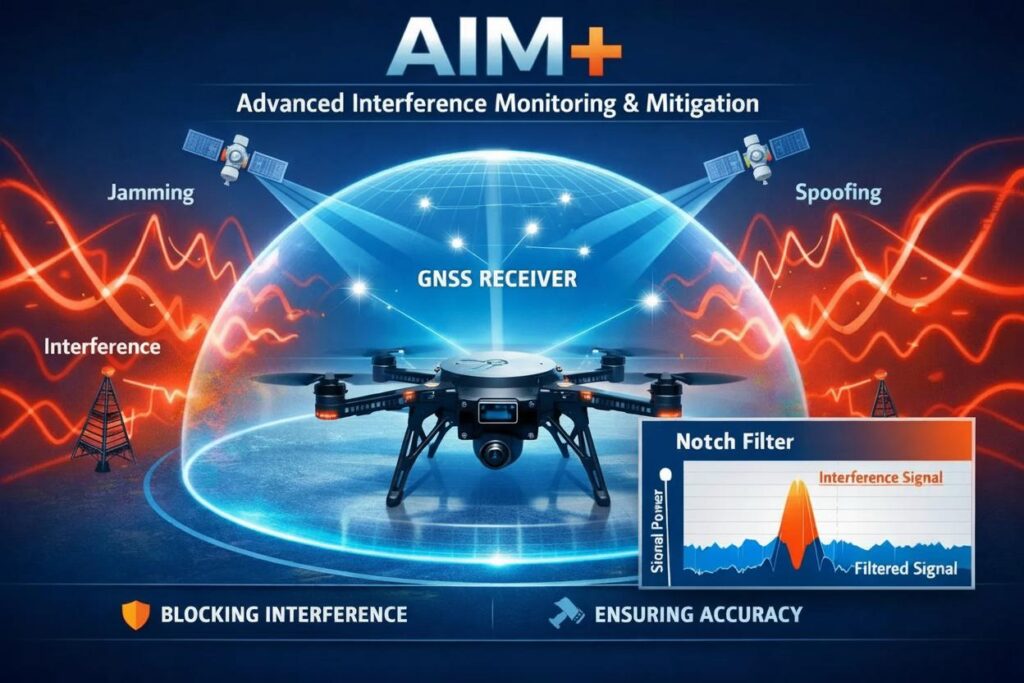

Advanced Anti-Spoofing GNSS: Protecting Against Deception
GNSS spoofing represents a highly sophisticated and dangerous threat. Unlike jamming, which completely disrupts signal reception and prevents a receiver from operating, spoofing involves transmitting fake satellite signals that appear legitimate to the receiver.
Advanced Anti-Spoofing for Resilient GNSS
A successful spoofing attack can trick a receiver into falsely calculating position or time, causing drones and autonomous systems to operate without triggering any alarms and potentially guiding a drone or vehicle without the operator ever realizing it. This makes advanced anti-spoofing particularly insidious, as it can compromise system integrity without any obvious signs of attack.
The Growing Threat to GNSS Integrity: The Importance of Anti-Spoofing GNSS
Global Navigation Satellite Systems (GNSS), including GPS, GLONASS, Galileo, and BeiDou, broadcast signals from Medium Earth Orbit that arrive on Earth incredibly weak. This inherent weakness makes GNSS particularly vulnerable to two primary forms of interference: jamming and spoofing.
Weak Signals
GNSS signals travel from MEO (~20,000km) and arrive very weak
Interference
RF signals from equipment can overwhelm satellite signals
Disruption
Jamming or spoofing can compromise positioning accuracy
Protection
AIM+ technology mitigates threats and secures operations
AIM+ Technology: Advanced Protection Against Jamming and Spoofing
Our Septentrio-powered AIM+ (Advanced Interference Mitigation) is a multi-layered security architecture integrated into our GNSS modules and boards. It doesn’t just detect interference- it actively mitigates it, providing comprehensive protection for your critical UAV applications.
Applications: Where Resilience Matters Most
GNSS interference can impact critical operations across multiple industries. Understanding where protection matters most helps you choose the right level of AIM+ security for your application.

Secure Drones and UAVs
In the spectacular world of aerial light shows, where hundreds or even thousands of drones create synchronized visual masterpieces against the night sky, precision and reliability are critical. Our advanced Resilent GNSS system is more than just a drone receiver; it is a comprehensive GNSS receiver engineered specifically to meet the extreme demands of professional light show operations, ensuring every drone is in its exact intended position and orientation at the precise required moment.

Autonomous Vehicles
The evolution of precision agriculture has placed unprecedented demands on unmanned aerial vehicles (drones) to perform tasks such as automated crop spraying, field mapping, and data collection with exceptional accuracy and reliability. At the heart of these advanced drone systems lies the need for a high-performance anti-spoofing GNSS solution that can deliver not only precise positioning but also robust operation in challenging environments.

Industrial cleaning
The adoption of unmanned aerial systems for industrial cleaning applications—such as high-rise facades, solar farms, and infrastructure maintenance—demands exceptional navigation accuracy and operational reliability. These specialized drone cleaning platforms require an anti-jamming GNSS receiver capable of delivering continuous centimeter-level positioning and precise heading data, even in electromagnetically congested urban settings.
AIM+ Resilience: Scalable Protection for GNSS Reliability
We understand that different GNSS applications demands different levels of security. That is why our GNSS receivers offer varying levels of AIM+ protection to match your specific needs and risk profile.
|
Protection Tier |
Features |
Best For |
|---|---|---|
|
● Basic |
Detection & Manual Mitigation |
Early-stage prototyping and low-risk environments |
|
● Advanced |
Automated Jamming Resilience & OSNMA |
Commercial-grade UAV GNSS and professional robotics |
|
● Premium |
Full Situational Awareness & Maximum Resilience |
Mission-critical infrastructure and high-stakes autonomous operations |
Why Choose Our Anti-Jamming GNSS for Maximum Resilience?
With over two decades of expertise in high-performance anti-spoofing GNSS OEM solutions, UAV GNSS is the trusted partner for organizations that cannot afford downtime. Our commitment to Assured PNT means that when you integrate our GNSS modules, you aren’t just getting a receiver—you are getting a complete, security-focused positioning solution.
Continuous Positioning
Operate through interference that would fail standard receivers, maintaining operational continuity in challenging environments.
Trustworthy Data
Built-in integrity checks ensure you can trust your position and time, providing confidence in critical decision-making.
Future-Proof
Regular firmware updates provide the latest anti-spoofing algorithms as threats evolve, keeping your system protected.
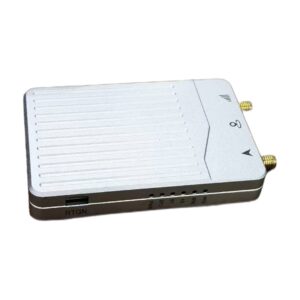
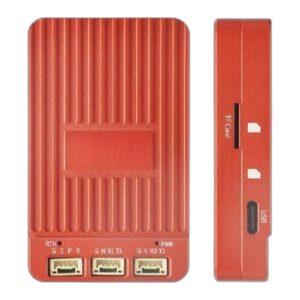
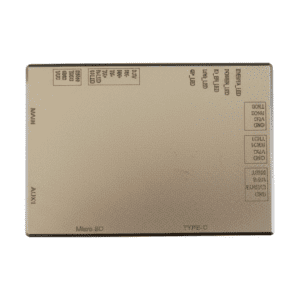
Featured AIM+ Protected Receivers
The core of our resilience strategy is based on the AIM+ security architecture. Unlike basic receivers, which are prone to signal noise, this system makes use of a high-resolution spectrum analyzer, which provides a real-time view of the RF environment. This enables us to proactively protect against sophisticated threats like OSNMA-targeted spoofing. With the ability to cross-check data authenticity through IMU integration, we are able to provide ‘truth’ data for your autonomous systems, even in the most hostile urban airspace.ing threats.