
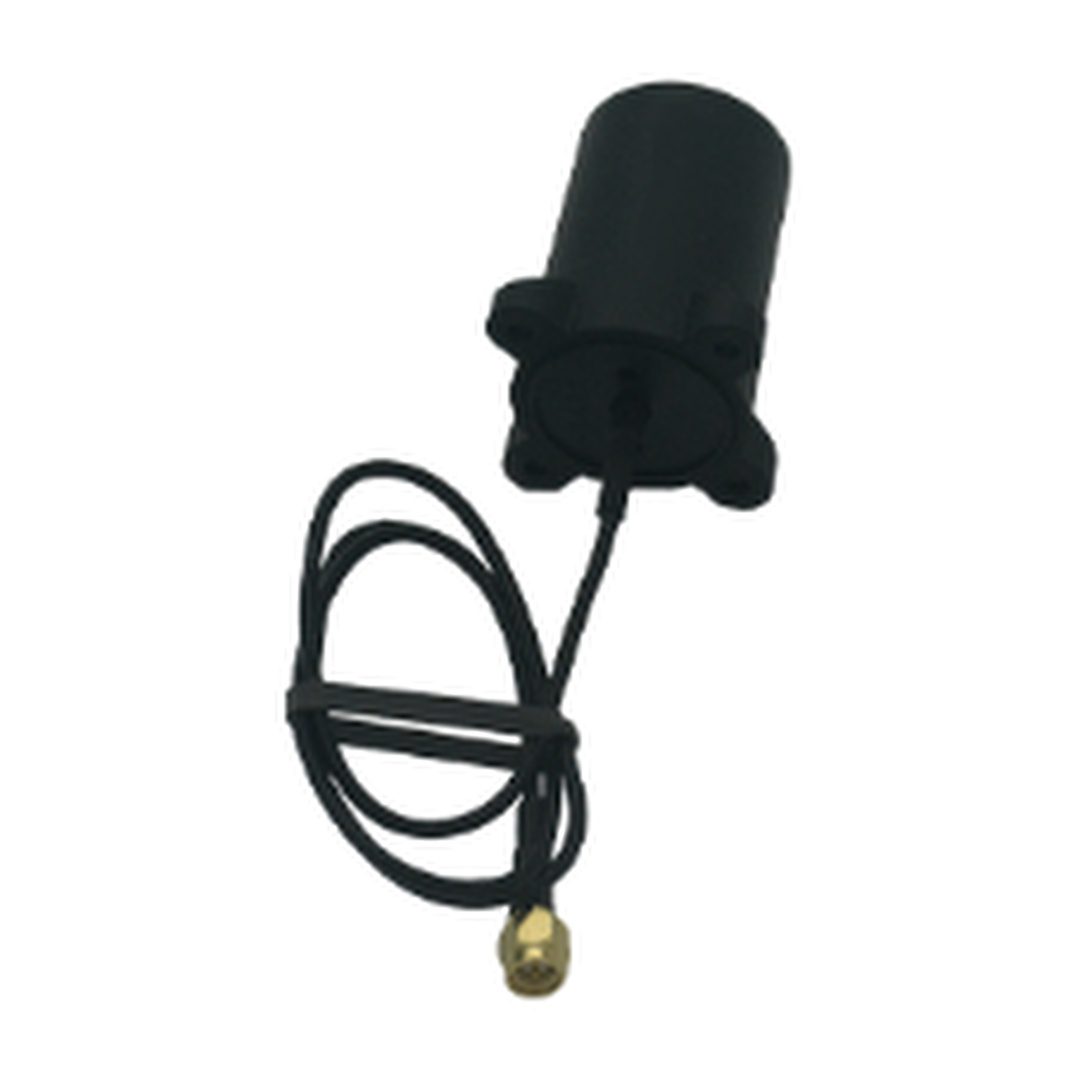
Multi-frequency Drone Antenna
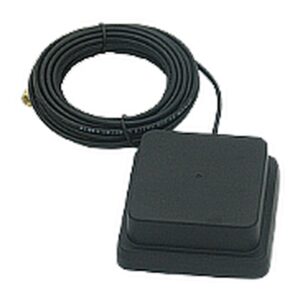
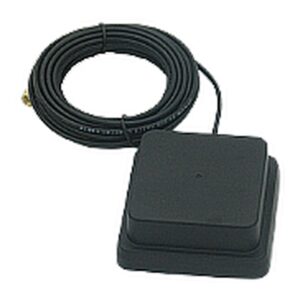
The EV220 is a professional-grade, multi-frequency, four-system drone GNSS antenna supporting GPS L1/L2, BeiDou B1/B2/B3, GLONASS G1/G2/G3, and Galileo E1/E5b/E6 — with a flat panel-mount form factor measuring just 49.8 × 38mm and a pre-fitted 600mm SMA pigtail cable. Designed specifically for lightweight UAVs, agriculture drones, aerial photography platforms, telemetry systems, traffic patrol, disaster monitoring, public security monitoring, power line patrol, and surveying applications, the EV220 delivers broad four-system multi-frequency GNSS signal coverage with an ultra-low noise figure of 1.3dB — in a flat, discreet, airframe-integrated antenna package that minimizes aerodynamic profile and weight impact.
The EV220’s flat panel geometry — secured by four M3.2 corner mounting holes on a 40 × 40mm bolt pattern — integrates flush with drone top plates, survey vehicle rooftops, and compact UAV airframes where a protruding cylindrical antenna would create unacceptable aerodynamic drag or mechanical interference. The 600mm pre-fitted SMA pigtail cable provides routing flexibility for clean, vibration-managed cable management inside drone enclosures and vehicle-mounted installations, eliminating the connector stress that direct-mount antennas impose on autopilot SMA ports during vibration and thermal cycling.
Description
Product Overview EV220 Multi-Frequency Drone Antenna — Four-System GPS / BDS / GLONASS / Galileo E6 UAV GNSS Antenna
Multi-Frequency Drone GNSS Antenna | GPS L1/L2 · BDS B1/B2/B3 · GLONASS G1/G2/G3 · Galileo E1/E5b/E6 | IP65 | Flat Panel Mount 49.8×38mm | 600mm Cable | Lightweight UAV · Agriculture · Survey · Patrol
The EV220 Multi-Frequency Drone Antenna is a flat panel-mount, four-system GNSS antenna engineered for direct airframe integration into lightweight UAV platforms and vehicle-mounted positioning systems requiring the broadest possible multi-constellation signal coverage in a minimal profile form factor. Supporting GPS L1/L2, BeiDou B1/B2/B3, GLONASS G1/G2/G3, and Galileo E1/E5b/E6 — the EV220’s Galileo E5b and E6 support places it ahead of many competing drone antennas by providing access to Galileo’s triple-frequency signals including E6, used by the Galileo High Accuracy Service (HAS) for global satellite-delivered PPP-RTK corrections without CORS dependency.
The EV220’s ultra-low noise figure of 1.3dB or less — combined with 33±2dB LNA gain — delivers exceptional signal quality to connected GNSS receivers across all supported frequency bands. A noise figure of 1.3dB is among the lowest in any commercial drone-class GNSS antenna, providing measurably better carrier phase measurement quality, faster satellite acquisition, more reliable RTK ambiguity resolution, and better positioning performance in low-signal environments including partial sky obstruction, high electromagnetic interference, and weak-signal low-elevation satellite tracking. This makes the EV220 the preferred choice for precision agricultural applications, high-accuracy survey mapping, and inspection drones where positioning accuracy directly determines mission quality.
At 49.8 × 38mm flat panel form factor with four M3.2 corner mounting holes on a standard 40 × 40mm grid, the EV220 fits the top plate mounting patterns of the most widely deployed lightweight drone platforms — enabling flush airframe integration that eliminates the aerodynamic drag and mechanical vulnerability of protruding antenna designs. The 600mm pre-fitted SMA pigtail provides cable routing flexibility for clean, strain-relief protected connection to autopilot GNSS ports inside the drone body, with sufficient length for most commercial lightweight drone frame depths.
BeiDou B3 global network frequency support provides enhanced positioning stability and satellite geometry for operations across Asia-Pacific, the Middle East, and all BeiDou coverage regions — with particular benefit for agricultural spray drones and power line inspection UAVs where consistent RTK fix reliability directly affects mission efficiency and safety. GLONASS G3 support adds the third GLONASS frequency for improved atmospheric correction and better performance at high latitudes. IP65 protection rating ensures reliable field operation in rain, dust, and agricultural spray exposure during daily UAV operations.
Key Applications
- Lightweight Agriculture / Plant Protection Drone Navigation
- Aerial Photography & Survey Mapping UAV
- Telemetry & Remote Sensing Drone Systems
- Disaster Monitoring & Emergency Response UAV
- Traffic Patrol & Monitoring UAV
- Power Line Patrol & Infrastructure Inspection Drone
- Public Security & Law Enforcement Monitoring UAV
- Vehicle-Mounted Multi-Frequency GNSS
- Surveying & Mapping Compact UAV Platforms
- GIS Field Data Collection Systems
Key Features
Passive Antenna Characteristics
| Parameter | Value |
|---|---|
| Frequency Range — BeiDou (BDS) | B1, B2, B3 (including global networking B3) |
| Frequency Range — GPS | L1, L2 |
| Frequency Range — GLONASS | G1, G2, G3 |
| Frequency Range — Galileo | E1, E5b, E6 |
| Antenna Impedance | 50 Ω |
| Polarization | RHCP (Right-Hand Circular Polarization) |
| Antenna Axis Ratio | ≤ 3 dB |
| Azimuth Coverage | 0° to 360° |
| VSWR | ≤ 1.5 |
| Maximum Gain | 2.5 dBi |
| Phase Center Error | ± 3 mm |
Low Noise Amplifier (LNA) Characteristics
| Parameter | Value |
|---|---|
| LNA Gain | 33 ± 2 dB |
| Noise Figure | ≤ 1.3 dB |
| VSWR | ≤ 2.0 |
| Passband Ripple | ± 2 dB |
| Operating Voltage | DC 3.3V to 12V |
| Operating Current | ≤ 50 mA |
Structural & Environmental Specifications
| Parameter | Value |
|---|---|
| Antenna Size | 49.8 × 38 mm (flat panel) |
| Connector / Cable | SMA male — 600mm pigtail cable |
| Mounting | 4 × M3.2 corner holes — 40 × 40mm bolt pattern |
| Waterproof Rating | IP65 |
| Operating Temperature | -40°C to +70°C |
| Storage Temperature | -55°C to +70°C |
| Storage Humidity | 95% non-condensing |
Dimensional Reference
| Dimension | Value |
|---|---|
| Overall Width | 49.8 mm ± 0.5 mm |
| Overall Height | 38.1 mm ± 0.5 mm |
| Antenna Element Diameter | Φ28.5 mm |
| Mounting Hole Size | 4 × Φ3.2 mm corner holes |
| Mounting Hole Pitch | 40.0 × 40.0 mm |
| SMA Connector Diameter | Φ33.0 mm base |
| Cable Length | 600 mm ± 10 mm |
| Antenna Profile Height | 1.0 mm radiating element profile |
Frequency Coverage Summary
| Satellite System | Frequency Bands Supported |
|---|---|
| GPS | L1, L2 |
| BeiDou (BDS) | B1, B2, B3 (including global networking B3) |
| GLONASS | G1, G2, G3 |
| Galileo | E1, E5b, E6 |
EV220 vs EV210 vs EV108 — Drone Antenna Model Comparison
| Feature | EV220 | EV210 | EV108 |
|---|---|---|---|
| Form Factor | 49.8×38mm flat panel | Φ27.5×57.6mm cylindrical | Φ90×24.6mm flat disc |
| Connector / Cable | SMA + 600mm pigtail | SMA direct mount | TNC-K direct mount |
| Galileo | E1, E5b, E6 | E1 only | E1, E5b, E6 |
| GLONASS | G1, G2, G3 | G1, G2 | G1, G2, G3 |
| Noise Figure | ≤ 1.3 dB | ≤ 1.3 dB | ≤ 2.0 dB |
| Waterproof | IP65 | IP67 mounted | IP67 assembled |
| Mounting | 4×M3.2 panel, 40×40mm | SMA screw direct | 4×M4.3 panel, 70mm PCD |
| Best For | Flat airframe flush mount, cable routing flexibility | Direct SMA autopilot port, ultra-compact | Large drone panel, TNC, L-Band |
Technical Features — Detailed
Flat Panel Form Factor with 600mm Pigtail Cable
The EV220’s flat 49.8 × 38mm panel form factor and four-corner M3.2 bolt mounting pattern enable flush integration directly onto drone top plates, vehicle rooftops, and survey equipment enclosures — completely eliminating the protruding profile of cylindrical and dome antennas. The low 1.0mm radiating element profile above the mounting surface creates minimal aerodynamic disruption on high-speed aerial photography and patrol drone platforms. The 600mm pre-fitted SMA pigtail cable provides critical routing flexibility for internal cable management, accommodating a wide range of drone frame depths and autopilot mounting positions without requiring additional cable extension adapters or imposing stress on GNSS receiver SMA ports during vibration and thermal expansion.
Galileo E1/E5b/E6 Triple-Frequency Support
The EV220 supports all three operational Galileo frequency bands — E1, E5b, and E6 — providing complete Galileo constellation utilization. Galileo E6 support is particularly significant as it enables future reception of the Galileo High Accuracy Service (HAS) signal that broadcasts global PPP-RTK corrections directly from satellites at no subscription cost. For UAV and vehicle-mounted systems operating beyond cellular coverage, Galileo E6 HAS capability will provide centimeter-level position corrections without requiring a local base station or 4G connectivity — critical for long-range inspection, remote agriculture, and disaster response operations.
GLONASS G3 Third Frequency
Full GLONASS G1/G2/G3 support adds the third GLONASS frequency, providing additional signal channels for ionospheric modeling and correction, improved positioning robustness at high latitudes, and enhanced multi-frequency ambiguity resolution for RTK applications. For drone operators in northern Europe, Russia, Canada, and other high-latitude regions where GLONASS satellite geometry is strongest, G3 support provides measurable improvements in positioning availability and RTK fix reliability.
Ultra-Low 1.3dB Noise Figure LNA
The EV220’s LNA achieves a noise figure of 1.3dB or less — delivering exceptionally clean GNSS signal amplification across all supported frequency bands. This ultra-low noise performance improves carrier phase measurement signal-to-noise ratio, accelerates satellite acquisition for faster RTK initialization, enables reliable tracking of weak low-elevation satellites, and maintains positioning performance in environments with elevated RF background noise. For precision agricultural UAV applications where centimeter-level spray accuracy is required, and for inspection drones flying in high-interference electromagnetic environments near power infrastructure, the EV220’s superior noise performance directly translates to better mission outcomes.
High Out-of-Band Interference Rejection
Strong out-of-band signal rejection suppresses interference from 4G/LTE/5G cellular base stations, video transmission systems, telemetry links, WiFi networks, power line electromagnetic emissions, and UAV onboard electronics — maintaining stable GNSS lock and positioning accuracy in the complex electromagnetic environments where traffic patrol, power line inspection, and public security monitoring UAVs operate. High rejection at cellular frequencies is particularly important for drones operating in urban and peri-urban environments where LTE and 5G signals are densely distributed.
Wide Beam Width with Low Elevation Angle Reception
Wide beam width and optimized antenna element design enable reliable satellite signal reception at low elevation angles — essential for UAV operations in partially obstructed environments including agricultural fields surrounded by trees, urban survey sites, disaster areas with debris, and power line corridors flanked by vegetation and structures. Full 360° azimuth coverage ensures consistent signal reception through all drone bank angles and heading changes during autonomous flight maneuvers.
Competitive Advantages
- Galileo E1/E5b/E6 triple-frequency — future-ready for Galileo HAS satellite-delivered PPP-RTK corrections without CORS or cellular
- GLONASS G1/G2/G3 triple-frequency — improved high-latitude positioning and ionospheric correction capability
- BeiDou B3 global network frequency — enhanced Asia-Pacific and Middle East agricultural and inspection drone performance
- Flat 49.8×38mm panel mount — flush airframe integration with zero aerodynamic profile on high-speed UAV platforms
- 600mm SMA pigtail cable — flexible internal cable routing without connector stress on autopilot GNSS ports
- 4×M3.2 on 40×40mm pattern — fits standard drone top plate mounting grids used across major lightweight UAV platforms
- Ultra-low 1.3dB noise figure — superior carrier phase quality for precision RTK agricultural and inspection drone operations
- High out-of-band rejection — stable GNSS lock near power lines, cellular infrastructure, and urban RF environments
- IP65 weatherproof — rain, agricultural spray, dust, and field humidity protection for daily UAV field operations
- Wide beam width with low elevation tracking — reliable satellite lock in obstructed agricultural, corridor, and urban environments
- 360° azimuth coverage — consistent signal through all drone bank angles and maneuvers
- -40°C to +70°C operating range — cold-climate agricultural operations through tropical disaster response
Standards & Compatibility
- Connector: SMA male (SMA-J) with 600mm pigtail cable — compatible with all major drone autopilots and GNSS modules with SMA-J female port
- Mounting: 4 × M3.2 corner holes on 40 × 40mm pitch — standard drone top plate and vehicle rooftop integration
- Waterproof: IP65 — suitable for agricultural, inspection, patrol, and surveillance UAV outdoor field operations
- Polarization: RHCP — standard for all GNSS satellite signals
- Power: DC 3.3V to 12V bias-tee via coaxial — compatible with all drone autopilot and navigation module power circuits
- Compatible GNSS Systems: GPS L1/L2, BeiDou B1/B2/B3, GLONASS G1/G2/G3, Galileo E1/E5b/E6 — simultaneous multi-system tracking
- Compatible Platforms: Lightweight agriculture drones, aerial photography UAVs, inspection and patrol drones, traffic monitoring UAVs, power line patrol drones, survey vehicle roof mounts, GIS field devices
Disclaimer
Specifications subject to change without notice. IP65 waterproof rating applies to the antenna assembly as specified. All performance values measured under standard laboratory and field conditions unless otherwise stated. Dimensional tolerances ±0.3mm unless otherwise noted.
Product Overview EV220 Multi-Frequency Drone Antenna — Four-System GPS / BDS / GLONASS / Galileo E6 UAV GNSS Antenna
Multi-Frequency Drone GNSS Antenna | GPS L1/L2 · BDS B1/B2/B3 · GLONASS G1/G2/G3 · Galileo E1/E5b/E6 | IP65 | Flat Panel Mount 49.8×38mm | 600mm Cable | Lightweight UAV · Agriculture · Survey · Patrol
The EV220 Multi-Frequency Drone Antenna is a flat panel-mount, four-system GNSS antenna engineered for direct airframe integration into lightweight UAV platforms and vehicle-mounted positioning systems requiring the broadest possible multi-constellation signal coverage in a minimal profile form factor. Supporting GPS L1/L2, BeiDou B1/B2/B3, GLONASS G1/G2/G3, and Galileo E1/E5b/E6 — the EV220’s Galileo E5b and E6 support places it ahead of many competing drone antennas by providing access to Galileo’s triple-frequency signals including E6, used by the Galileo High Accuracy Service (HAS) for global satellite-delivered PPP-RTK corrections without CORS dependency.
The EV220’s ultra-low noise figure of 1.3dB or less — combined with 33±2dB LNA gain — delivers exceptional signal quality to connected GNSS receivers across all supported frequency bands. A noise figure of 1.3dB is among the lowest in any commercial drone-class GNSS antenna, providing measurably better carrier phase measurement quality, faster satellite acquisition, more reliable RTK ambiguity resolution, and better positioning performance in low-signal environments including partial sky obstruction, high electromagnetic interference, and weak-signal low-elevation satellite tracking. This makes the EV220 the preferred choice for precision agricultural applications, high-accuracy survey mapping, and inspection drones where positioning accuracy directly determines mission quality.
At 49.8 × 38mm flat panel form factor with four M3.2 corner mounting holes on a standard 40 × 40mm grid, the EV220 fits the top plate mounting patterns of the most widely deployed lightweight drone platforms — enabling flush airframe integration that eliminates the aerodynamic drag and mechanical vulnerability of protruding antenna designs. The 600mm pre-fitted SMA pigtail provides cable routing flexibility for clean, strain-relief protected connection to autopilot GNSS ports inside the drone body, with sufficient length for most commercial lightweight drone frame depths.
BeiDou B3 global network frequency support provides enhanced positioning stability and satellite geometry for operations across Asia-Pacific, the Middle East, and all BeiDou coverage regions — with particular benefit for agricultural spray drones and power line inspection UAVs where consistent RTK fix reliability directly affects mission efficiency and safety. GLONASS G3 support adds the third GLONASS frequency for improved atmospheric correction and better performance at high latitudes. IP65 protection rating ensures reliable field operation in rain, dust, and agricultural spray exposure during daily UAV operations.
Key Applications
- Lightweight Agriculture / Plant Protection Drone Navigation
- Aerial Photography & Survey Mapping UAV
- Telemetry & Remote Sensing Drone Systems
- Disaster Monitoring & Emergency Response UAV
- Traffic Patrol & Monitoring UAV
- Power Line Patrol & Infrastructure Inspection Drone
- Public Security & Law Enforcement Monitoring UAV
- Vehicle-Mounted Multi-Frequency GNSS
- Surveying & Mapping Compact UAV Platforms
- GIS Field Data Collection Systems
Key Features
Passive Antenna Characteristics
| Parameter | Value |
|---|---|
| Frequency Range — BeiDou (BDS) | B1, B2, B3 (including global networking B3) |
| Frequency Range — GPS | L1, L2 |
| Frequency Range — GLONASS | G1, G2, G3 |
| Frequency Range — Galileo | E1, E5b, E6 |
| Antenna Impedance | 50 Ω |
| Polarization | RHCP (Right-Hand Circular Polarization) |
| Antenna Axis Ratio | ≤ 3 dB |
| Azimuth Coverage | 0° to 360° |
| VSWR | ≤ 1.5 |
| Maximum Gain | 2.5 dBi |
| Phase Center Error | ± 3 mm |
Low Noise Amplifier (LNA) Characteristics
| Parameter | Value |
|---|---|
| LNA Gain | 33 ± 2 dB |
| Noise Figure | ≤ 1.3 dB |
| VSWR | ≤ 2.0 |
| Passband Ripple | ± 2 dB |
| Operating Voltage | DC 3.3V to 12V |
| Operating Current | ≤ 50 mA |
Structural & Environmental Specifications
| Parameter | Value |
|---|---|
| Antenna Size | 49.8 × 38 mm (flat panel) |
| Connector / Cable | SMA male — 600mm pigtail cable |
| Mounting | 4 × M3.2 corner holes — 40 × 40mm bolt pattern |
| Waterproof Rating | IP65 |
| Operating Temperature | -40°C to +70°C |
| Storage Temperature | -55°C to +70°C |
| Storage Humidity | 95% non-condensing |
Dimensional Reference
| Dimension | Value |
|---|---|
| Overall Width | 49.8 mm ± 0.5 mm |
| Overall Height | 38.1 mm ± 0.5 mm |
| Antenna Element Diameter | Φ28.5 mm |
| Mounting Hole Size | 4 × Φ3.2 mm corner holes |
| Mounting Hole Pitch | 40.0 × 40.0 mm |
| SMA Connector Diameter | Φ33.0 mm base |
| Cable Length | 600 mm ± 10 mm |
| Antenna Profile Height | 1.0 mm radiating element profile |
Frequency Coverage Summary
| Satellite System | Frequency Bands Supported |
|---|---|
| GPS | L1, L2 |
| BeiDou (BDS) | B1, B2, B3 (including global networking B3) |
| GLONASS | G1, G2, G3 |
| Galileo | E1, E5b, E6 |
EV220 vs EV210 vs EV108 — Drone Antenna Model Comparison
| Feature | EV220 | EV210 | EV108 |
|---|---|---|---|
| Form Factor | 49.8×38mm flat panel | Φ27.5×57.6mm cylindrical | Φ90×24.6mm flat disc |
| Connector / Cable | SMA + 600mm pigtail | SMA direct mount | TNC-K direct mount |
| Galileo | E1, E5b, E6 | E1 only | E1, E5b, E6 |
| GLONASS | G1, G2, G3 | G1, G2 | G1, G2, G3 |
| Noise Figure | ≤ 1.3 dB | ≤ 1.3 dB | ≤ 2.0 dB |
| Waterproof | IP65 | IP67 mounted | IP67 assembled |
| Mounting | 4×M3.2 panel, 40×40mm | SMA screw direct | 4×M4.3 panel, 70mm PCD |
| Best For | Flat airframe flush mount, cable routing flexibility | Direct SMA autopilot port, ultra-compact | Large drone panel, TNC, L-Band |
Technical Features — Detailed
Flat Panel Form Factor with 600mm Pigtail Cable
The EV220’s flat 49.8 × 38mm panel form factor and four-corner M3.2 bolt mounting pattern enable flush integration directly onto drone top plates, vehicle rooftops, and survey equipment enclosures — completely eliminating the protruding profile of cylindrical and dome antennas. The low 1.0mm radiating element profile above the mounting surface creates minimal aerodynamic disruption on high-speed aerial photography and patrol drone platforms. The 600mm pre-fitted SMA pigtail cable provides critical routing flexibility for internal cable management, accommodating a wide range of drone frame depths and autopilot mounting positions without requiring additional cable extension adapters or imposing stress on GNSS receiver SMA ports during vibration and thermal expansion.
Galileo E1/E5b/E6 Triple-Frequency Support
The EV220 supports all three operational Galileo frequency bands — E1, E5b, and E6 — providing complete Galileo constellation utilization. Galileo E6 support is particularly significant as it enables future reception of the Galileo High Accuracy Service (HAS) signal that broadcasts global PPP-RTK corrections directly from satellites at no subscription cost. For UAV and vehicle-mounted systems operating beyond cellular coverage, Galileo E6 HAS capability will provide centimeter-level position corrections without requiring a local base station or 4G connectivity — critical for long-range inspection, remote agriculture, and disaster response operations.
GLONASS G3 Third Frequency
Full GLONASS G1/G2/G3 support adds the third GLONASS frequency, providing additional signal channels for ionospheric modeling and correction, improved positioning robustness at high latitudes, and enhanced multi-frequency ambiguity resolution for RTK applications. For drone operators in northern Europe, Russia, Canada, and other high-latitude regions where GLONASS satellite geometry is strongest, G3 support provides measurable improvements in positioning availability and RTK fix reliability.
Ultra-Low 1.3dB Noise Figure LNA
The EV220’s LNA achieves a noise figure of 1.3dB or less — delivering exceptionally clean GNSS signal amplification across all supported frequency bands. This ultra-low noise performance improves carrier phase measurement signal-to-noise ratio, accelerates satellite acquisition for faster RTK initialization, enables reliable tracking of weak low-elevation satellites, and maintains positioning performance in environments with elevated RF background noise. For precision agricultural UAV applications where centimeter-level spray accuracy is required, and for inspection drones flying in high-interference electromagnetic environments near power infrastructure, the EV220’s superior noise performance directly translates to better mission outcomes.
High Out-of-Band Interference Rejection
Strong out-of-band signal rejection suppresses interference from 4G/LTE/5G cellular base stations, video transmission systems, telemetry links, WiFi networks, power line electromagnetic emissions, and UAV onboard electronics — maintaining stable GNSS lock and positioning accuracy in the complex electromagnetic environments where traffic patrol, power line inspection, and public security monitoring UAVs operate. High rejection at cellular frequencies is particularly important for drones operating in urban and peri-urban environments where LTE and 5G signals are densely distributed.
Wide Beam Width with Low Elevation Angle Reception
Wide beam width and optimized antenna element design enable reliable satellite signal reception at low elevation angles — essential for UAV operations in partially obstructed environments including agricultural fields surrounded by trees, urban survey sites, disaster areas with debris, and power line corridors flanked by vegetation and structures. Full 360° azimuth coverage ensures consistent signal reception through all drone bank angles and heading changes during autonomous flight maneuvers.
Competitive Advantages
- Galileo E1/E5b/E6 triple-frequency — future-ready for Galileo HAS satellite-delivered PPP-RTK corrections without CORS or cellular
- GLONASS G1/G2/G3 triple-frequency — improved high-latitude positioning and ionospheric correction capability
- BeiDou B3 global network frequency — enhanced Asia-Pacific and Middle East agricultural and inspection drone performance
- Flat 49.8×38mm panel mount — flush airframe integration with zero aerodynamic profile on high-speed UAV platforms
- 600mm SMA pigtail cable — flexible internal cable routing without connector stress on autopilot GNSS ports
- 4×M3.2 on 40×40mm pattern — fits standard drone top plate mounting grids used across major lightweight UAV platforms
- Ultra-low 1.3dB noise figure — superior carrier phase quality for precision RTK agricultural and inspection drone operations
- High out-of-band rejection — stable GNSS lock near power lines, cellular infrastructure, and urban RF environments
- IP65 weatherproof — rain, agricultural spray, dust, and field humidity protection for daily UAV field operations
- Wide beam width with low elevation tracking — reliable satellite lock in obstructed agricultural, corridor, and urban environments
- 360° azimuth coverage — consistent signal through all drone bank angles and maneuvers
- -40°C to +70°C operating range — cold-climate agricultural operations through tropical disaster response
Standards & Compatibility
- Connector: SMA male (SMA-J) with 600mm pigtail cable — compatible with all major drone autopilots and GNSS modules with SMA-J female port
- Mounting: 4 × M3.2 corner holes on 40 × 40mm pitch — standard drone top plate and vehicle rooftop integration
- Waterproof: IP65 — suitable for agricultural, inspection, patrol, and surveillance UAV outdoor field operations
- Polarization: RHCP — standard for all GNSS satellite signals
- Power: DC 3.3V to 12V bias-tee via coaxial — compatible with all drone autopilot and navigation module power circuits
- Compatible GNSS Systems: GPS L1/L2, BeiDou B1/B2/B3, GLONASS G1/G2/G3, Galileo E1/E5b/E6 — simultaneous multi-system tracking
- Compatible Platforms: Lightweight agriculture drones, aerial photography UAVs, inspection and patrol drones, traffic monitoring UAVs, power line patrol drones, survey vehicle roof mounts, GIS field devices
Disclaimer
Specifications subject to change without notice. IP65 waterproof rating applies to the antenna assembly as specified. All performance values measured under standard laboratory and field conditions unless otherwise stated. Dimensional tolerances ±0.3mm unless otherwise noted.