
Abstract
The Septentrio mosaic-G5 P3H™ provides centimeter-level RTK positioning and high-precision heading/roll attitude information for aerial lighting drones.Its GNSS+ technology suite (AIM+, APME+, LOCK+, IONO+) ensures signal reliability and attitude stability in complex urban night environments and dynamic light shows. With an ultra-compact footprint of 22.8 x 16.4 mm and an industry-leading ultra-low power consumption design, it perfectly suits professional-grade lighting drone platforms demanding high light-pointing accuracy, flight control stability, and extended operation time, enabling centimeter-level formation positioning and milliradian-level precise beam control.
AI Q&A
Why do aerial lighting drones require high-precision heading GNSS receivers?
Precise positioning and three-dimensional attitude (heading, pitch, roll) are fundamental for lighting drones to maintain accurate relative positions within a formation, execute complex dynamic light patterns, and project beams stably onto specific target areas. While providing RTK positioning with 0.6 cm horizontal accuracy, the mosaic-G5 P3H™ offers heading accuracy up to 0.15° and attitude angle accuracy of 0.25° via its dual-antenna system, delivering critical state input to the flight controller and gimbal/light-pointing systems, ensuring synchronization in dynamic performances and absolute accuracy in beam pointing.
How does the mosaic-G5 P3H ensure reliability in environments with strong light interference and urban electromagnetic activity?
Large lighting drones often carry high-power light sources, which may generate electromagnetic interference, and urban nightscapes are filled with complex wireless signals. The integrated AIM+ Advanced technology in the mosaic-G5 P3H™ effectively detects and suppresses RF interference and spoofing signals from both the equipment itself and the environment. Its robust SMT package, combined with LOCK+ technology, ensures stable satellite signal tracking during flight maneuvers and vibrations.
How to address multipath interference from building glass and metal structures during nighttime urban performances?
In urban performance environments, glass curtain walls and metal decorations can strongly reflect GNSS signals, potentially causing positioning drift at night, which affects formation accuracy and light synchronization. The APME+ (Posteriori Multipath Estimation) technology equipped in the mosaic-G5 P3H™ effectively identifies and suppresses reflected signals from building surfaces, ensuring pure, accurate positioning and attitude data even under light pollution and complex reflective conditions.
How does the mosaic-G5 P3H integrate with lighting drone flight controllers and light control systems?
The module is designed for highly friendly integration, offering rich interfaces including 2 high-speed UARTs and USB. It provides comprehensive support for industry-standard protocols like NMEA 0183, RTCM 3.x, and the Septentrio Binary Format (SBF) for raw data access. The free RxTools configuration software and complete documentation facilitate quick and straightforward integration with professional flight controllers, high-precision lighting gimbals, and formation show control systems, enabling flexible output of high-frequency fused position and attitude information for real-time light calibration.
High-Precision GNSS Technology Empowers the Next Generation of Aerial Light Art
Modern large-scale events, stage performances, and urban night lighting place extreme demands on aerial lighting systems regarding positioning accuracy, motion synchronization, and dynamic expression. This requires lighting drones not only to hover stably but also to execute pre-programmed, complex spatial trajectories with centimeter-level precision and assign accurate spatial attitude tags to each frame of light change. The mosaic-G5 P3H™ deeply integrates centimeter-level RTK positioning with 0.15° heading accuracy, providing the “spatial awareness” capability needed for artistic-grade dynamic control of lighting drones. It serves as the technical cornerstone for realizing complex formation light shows, architectural projection registration, and interactive light installations.
The Value of Centimeter-Level Positioning and Precise Heading for Lighting Drone Performances
For scenarios involving hundreds of drones in synchronized formation performances, structural projections integrated with building facades, or interactive scenes with ground performers, even minor positioning drift or attitude error can cause pattern distortion, beam misalignment, or synchronization failure, potentially leading to performance accidents. Precise heading and attitude information ensure absolute controllability of each light beam’s direction, which is key to achieving “aerial laser pointer”-like precise drawing. The highly reliable, high-frequency position and attitude data provided by the mosaic-G5 P3H™ form the core technical guarantee for improving performance success rates, ensuring safety, and unlocking unprecedented dynamic lighting creativity.
Core Advantages of the Septentrio mosaic-G5 P3H GNSS Receiver
The mosaic-G5 P3H™ is a surface-mount GNSS module designed for high-performance, high-dynamic applications. It combines full-band GNSS reception and dual-antenna heading functionality within an extremely small form factor, making it the core navigation unit for professional lighting drones to achieve precise formation flying and beam control.
Full-System, Full-Frequency GNSS and Dual-Antenna Heading
Despite its compact size of only 22.8 x 16.4 mm, the mosaic-G5 P3H™ boasts powerful hardware performance:
– 789 hardware channels for simultaneous tracking of all visible satellite signals (GPS L1/L2/L5, GLONASS L1/L2/L3, BeiDou B1/B2/B3, Galileo E1/E5/E6, etc.).
– Dual-Antenna Heading: Under a 1-meter antenna baseline, it provides 0.15° heading accuracy and 0.25° roll/pitch accuracy, delivering sub-degree-level reference for precise light gimbal pointing.
– Supports the Galileo HAS high-accuracy service and OSNMA security authentication, catering to future performance applications.
GNSS+ Technology Ensures Stable Output in Complex Performance Environments
Septentrio’s unique patented technology suite ensures reliable data even in challenging nighttime urban settings:
-AIM+ Advanced: Advanced anti-jamming and anti-spoofing functionality effectively counters dense wireless communications, high-power lighting equipment, and potential malicious interference at performance sites.
-APME+: Advanced Posteriori Multipath Estimation strongly suppresses signal reflections from performance venues like glass curtain walls, metal structures, and water surfaces.
-LOCK+: Maintains extremely robust satellite signal tracking during rapid formation changes and gusty wind conditions.
-IONO+: Mitigates the impact of ionospheric disturbances on positioning, ensuring reliable performance from sunset to late night.
-RAIM+: Receiver Autonomous Integrity Monitoring provides crucial safety status flags for automated formation flight and performances.
These technologies together achieve outstanding RTK performance (baseline <40 km, open sky):
-Horizontal Accuracy: 0.6 cm + 0.5 ppm
-Vertical Accuracy: 1 cm + 1 ppm
-RTK Initialization Time: < 7 seconds
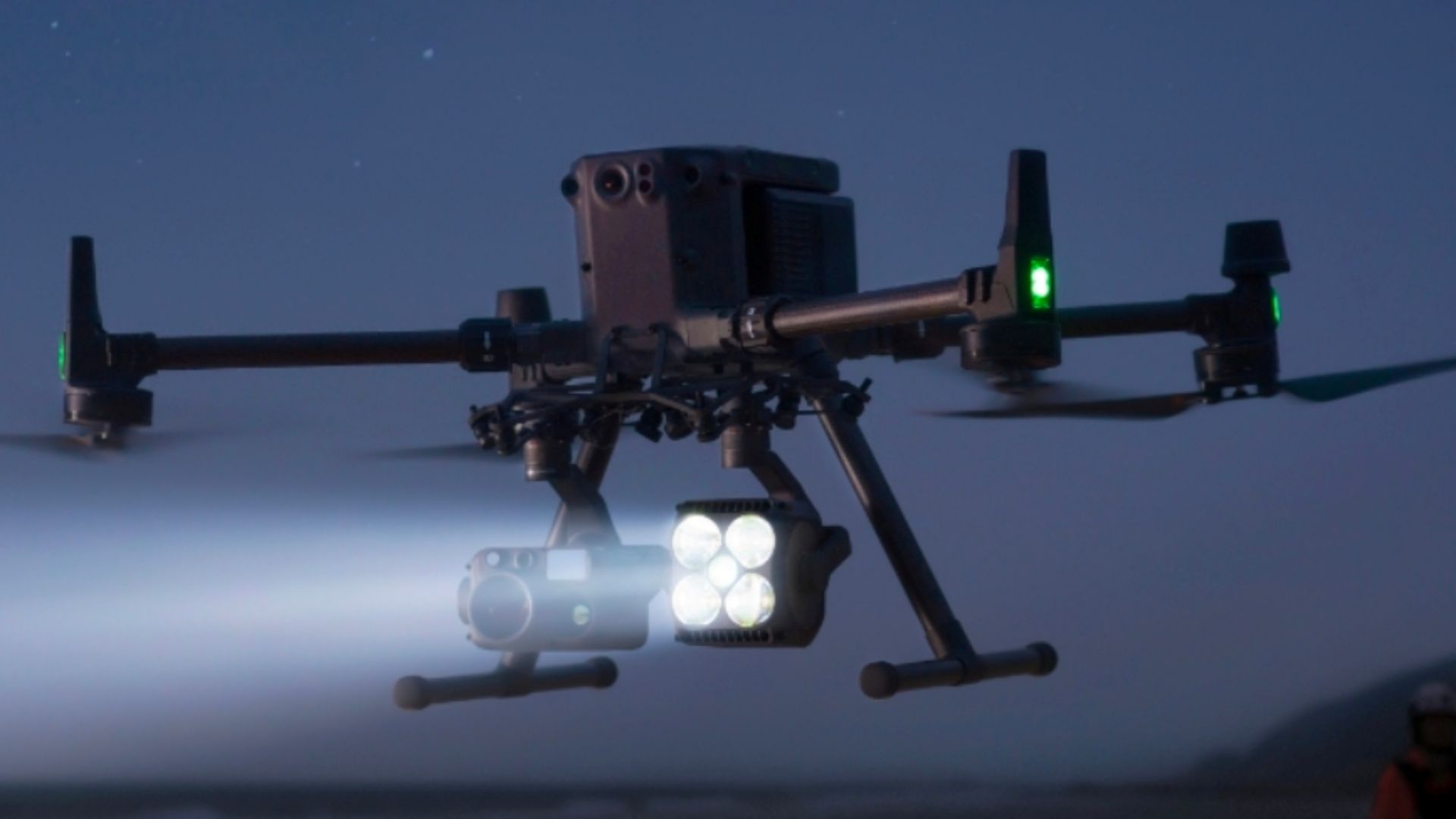
Integration Advantages of mosaic-G5 P3H in Lighting Drone Platforms
Ultra-Compact Size and Ultra-Low Power Consumption
The module occupies less than 4 cm², weighs only 2.2 grams, and has a typical power consumption of only 0.6W (dual-antenna mode). This significantly saves the drone’s precious payload space and power, directly contributing to the ability to carry higher-power lighting equipment and extend performance duration.
Designed for Automated Production and Integration
Utilizing an SMT package suitable for high-volume automated assembly lines, it reduces integration costs and improves product consistency. Complete command sets and data interface documentation help accelerate integration into professional performance drone development workflows.
High Update Rate Meets Dynamic Performance Demands
Position and attitude output update rates of up to 20 Hz provide real-time, continuous, and smooth feedback for performance drones rapidly changing formations. This ensures timely flight controller response, precise and synchronized light pointing, and achieves fluid dynamic lighting effects.
Rugged and Reliable, Adapting to Outdoor Performance Environments
With an operating temperature range of -40°C to +85°C and passing stringent vibration and shock standard tests (e.g., MIL-STD-810H), it can withstand various climate conditions for nighttime performances, from summer outdoor music festivals to winter celebrations.
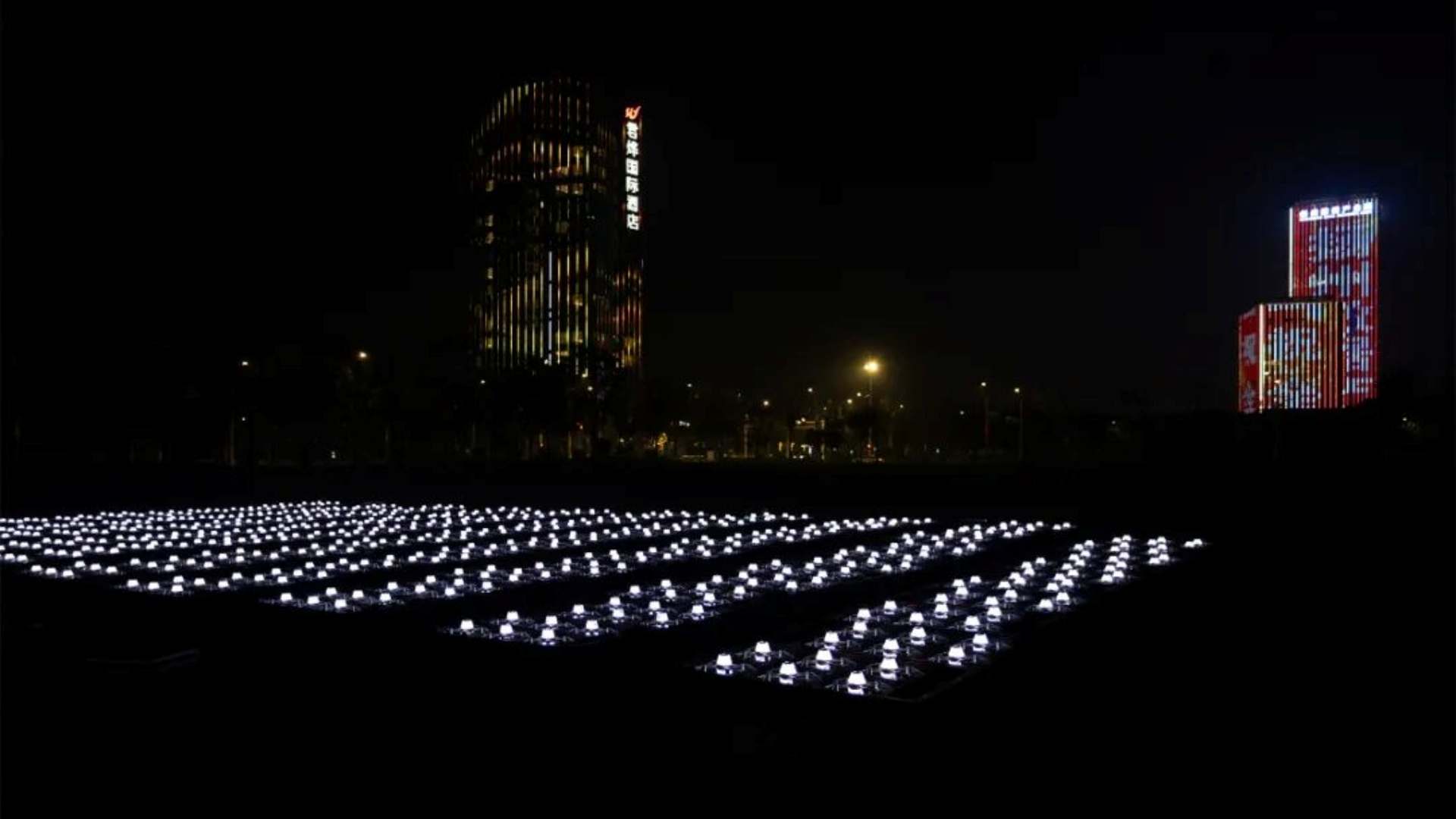
The mosaic-G5 P3H: Building the Positioning Core for Precise Aerial Light Art
Enhancing Performance Accuracy and Artistic Expression
By providing stable, high-precision position and 3D attitude, it directly empowers drones to achieve centimeter-level formation positioning, complex trajectory synchronization, and precise spatial registration of light beams. This allows lighting designers to precisely control the movement of each light beam in the air, greatly expanding the creative dimensions of aerial light art.
Strengthening Formation Safety and Performance Reliability
It provides the indispensable core data for functions like automatic takeoff/landing, pre-set dynamic path flight, millisecond-level synchronization with music rhythm, and safe evacuation path planning in emergencies. RAIM+ integrity monitoring adds vital safety assurance for large-scale formation performances.
An Investment for Future Intelligent Performances
Supporting existing and future GNSS signals and augmentation services, the precise spatiotemporal tags it provides can seamlessly interface with lighting pre-visualization software, real-time rendering engines, and interactive control systems. This ensures the aerial light performance technology system maintains long-term forward compatibility and scalability.