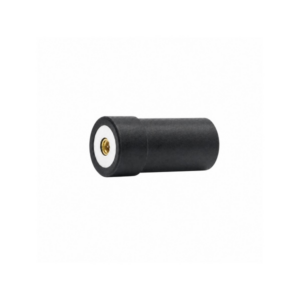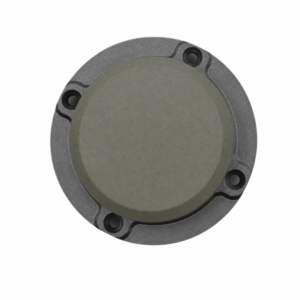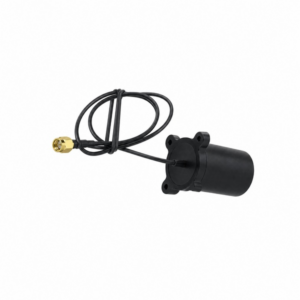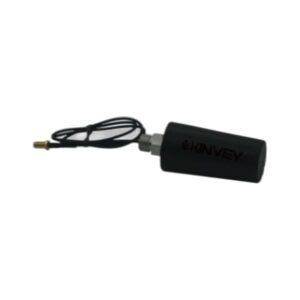

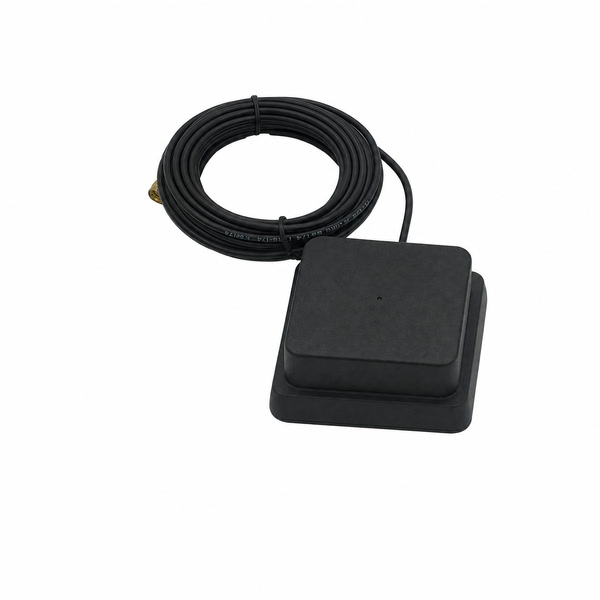
EV226 Vehicle Antenna
Integrated GNSS smart antenna with Septentrio receiver technology. Compact all-in-one solution for UAVs and autonomous systems requiring precision positioning.
Description
Product Overview EV226 Vehicle GNSS Antenna — Multi-Frequency Magnetic Mount GPS / BDS / GLONASS / Galileo
Multi-Frequency Vehicle GNSS Antenna | GPS L1/L2/L5 · BDS B1I/B2I/B2A · GLONASS G1/G2 · Galileo E1/E5b/E6 · L-Band | Magnetic Mount | IP67 | 3m Cable | Autonomous & Unmanned Vehicles The EV226 Vehicle GNSS Antenna is a compact, high-precision, multi-frequency magnetic-mount antenna engineered for the positioning accuracy and environmental durability requirements of autonomous ground vehicles, unmanned delivery platforms, and high-precision vehicle navigation systems. Supporting GPS L1/L2/L5, BeiDou B1I/B2I/B2A, GLONASS G1/G2, Galileo E1/E5b/E6, and L-Band simultaneously, the EV226 provides the broadest multi-constellation signal coverage available in a vehicle-class magnetic-mount antenna — maximizing satellite visibility, improving positioning geometry, and delivering the signal redundancy essential for safe autonomous vehicle operation across all geographic regions and road environments. The EV226’s magnetic suction installation system enables fast, tool-free antenna placement on any ferromagnetic vehicle surface — car rooftops, truck cab roofs, bus tops, and test vehicle platforms — with sufficient holding force to maintain position through highway driving vibration and acceleration. The 3-meter RG174 SMA pigtail cable provides routing flexibility through door seals, roof cable entries, or cable clips from the antenna mounting point to the vehicle’s GNSS receiver or autonomous driving computer, accommodating a wide range of vehicle cabin depths and installation configurations without requiring additional cable extensions. Galileo E1/E5b/E6 triple-frequency support positions the EV226 for future compatibility with the Galileo High Accuracy Service (HAS) — which delivers global PPP-RTK corrections via satellite at no subscription cost. For autonomous vehicles operating in remote logistics corridors, mining sites, and agricultural environments where CORS network coverage and 4G cellular connectivity may be unreliable, Galileo E6 HAS support provides a satellite-delivered path to centimeter-level positioning accuracy independent of ground infrastructure. BeiDou B2A support adds the newer BDS-3 signal for improved ionospheric correction and better positioning performance in Asia-Pacific operational regions. The EV226 operates across -40°C to +95°C — a wider temperature range than most competing vehicle GNSS antennas — ensuring reliable performance through arctic winter logistics operations, desert summer autonomous truck routes, and tropical delivery vehicle deployments. IP67 waterproof and dustproof construction with 95% non-condensing humidity tolerance provides protection against rain, road spray, car wash exposure, and the thermal cycling and condensation that challenge permanently installed vehicle antennas over years of outdoor operation. At just 70 grams without cable, the EV226 imposes minimal weight on vehicle rooftop installations while delivering the 4dBi gain and full-frequency signal performance of much larger vehicle GNSS antennas.
Key Applications
- Unmanned Delivery Vehicle GNSS Positioning
- Self-Driving Truck Autonomous Navigation
- Autonomous Bus & Public Transit GNSS
- Self-Driving Taxi & Robotaxi Positioning
- Unmanned & Unpiloted Ground Vehicle Navigation
- Autonomous Logistics & Warehouse Vehicle
- Vehicle-Mounted Survey & Mapping
- Fleet Tracking & Telematics
- Road Construction & Mining Machine GNSS
- High-Precision Vehicle Test & Validation
Key Features
Passive Antenna Characteristics
| Parameter | Value |
|---|---|
| Frequency Range — BeiDou (BDS) | B1I, B2I, B2A |
| Frequency Range — GPS | L1, L2, L5 |
| Frequency Range — GLONASS | G1, G2 |
| Frequency Range — Galileo | E1, E5b, E6 |
| Frequency Range — L-Band | Supported |
| Antenna Impedance | 50 Ω |
| Polarization | RHCP (Right-Hand Circular Polarization) |
| Antenna Axis Ratio | ≤ 3 dB |
| Azimuth Coverage | 0° to 360° |
| VSWR | ≤ 1.5 |
| Maximum Gain | 4 dBi |
| Phase Center Error | ± 3 mm |
Low Noise Amplifier (LNA) Characteristics
| Parameter | Value |
|---|---|
| LNA Gain | 33 ± 2 dB |
| Noise Figure | ≤ 2 dB |
| VSWR | ≤ 2.0 |
| Passband Ripple | ± 2 dB |
| Operating Voltage | DC 3.3V to 12V |
| Operating Current | ≤ 50 mA |
Structural & Environmental Specifications
| Parameter | Value |
|---|---|
| Antenna Size | 75 × 75 × 30 mm |
| Weight | 70 grams or less (without cable) |
| Connector / Cable | SMA male (SMA-J) — RG174 coaxial, 3000mm (3 meters) |
| Installation | Magnetic suction — tool-free rooftop mounting on ferromagnetic surfaces |
| Waterproof Rating | IP67 |
| Operating Temperature | -40°C to +95°C |
| Storage Temperature | -55°C to +95°C |
| Storage Humidity | 95% non-condensing |
Dimensional Reference
| Dimension | Value |
|---|---|
| Body Width | 75 mm +0.5 / -0 |
| Body Depth | 75 mm +0.5 / -0 |
| Body Height | 30 mm +0.5 / -0 |
| Cable Type | RG174 coaxial |
| Cable Diameter | Φ2.8 mm |
| Cable Length | 3000 mm ± 50 mm |
| Base | Magnetic surface with label pasting area |
Frequency Coverage Summary
| Satellite System | Frequency Bands Supported |
|---|---|
| GPS | L1, L2, L5 |
| BeiDou (BDS) | B1I, B2I, B2A (BDS-3 signal) |
| GLONASS | G1, G2 |
| Galileo | E1, E5b, E6 |
| L-Band | Supported — PPP correction reception |
Technical Features — Detailed
Magnetic Suction Mount — Tool-Free Rooftop Installation
The EV226’s magnetic suction base enables instant, tool-free installation on any ferromagnetic vehicle surface — car rooftops, truck cab tops, bus roofs, van roofs, and test vehicle platforms — providing a secure, vibration-resistant hold through highway driving, urban stop-start operation, and rough road conditions. The magnetic mount allows fast repositioning between vehicles in fleet testing and multi-vehicle autonomous system development — eliminating the drilling, sealing, and bracket installation required by permanent screw-mount antennas. The 3-meter RG174 cable provides sufficient length to route from the rooftop mounting point through a door seal or roof cable entry to GNSS receivers and autonomous driving computers typically located in the vehicle cabin or trunk.
4dBi Higher Gain for Vehicle Environments
The EV226 achieves 4dBi maximum gain — 1.5dBi higher than standard compact vehicle GNSS antennas — providing stronger signal reception particularly at low satellite elevation angles. For vehicles in urban canyons, tunnels approaches, and near tall buildings, improved gain at low elevation angles increases the number of usable satellites and maintains GNSS positioning availability in partially obstructed environments where standard vehicle antennas struggle to maintain lock. Wide beam width and full 360° azimuth coverage ensure consistent signal reception regardless of vehicle heading and orientation on road networks.
BeiDou B2A (BDS-3) Signal Support
The EV226 includes support for BeiDou B2A — the new BDS-3 signal providing improved accuracy, better ionospheric correction, and enhanced anti-spoofing properties compared to legacy BDS-2 signals. B2A support is increasingly important for autonomous vehicle GNSS systems targeting operation in China and Asia-Pacific regions, where the full BDS-3 constellation provides the densest satellite coverage and where regulatory and certification requirements may specify BeiDou signal compatibility. Combined with B This high-quality vehicle antenna is compatible with Septentrio GNSS receivers. For more GNSS antenna options, browse our range or contact us for pricing. This multi-frequency GNSS antenna is designed for compatibility with Septentrio GNSS receivers. For complete antenna solutions, GNSS antennas or request a quote for B2B volume pricing. This multi-frequency GNSS antenna is designed for compatibility with Septentrio GNSS receivers. For complete antenna solutions, GNSS antennas or request a quote for B2B volume pricing.