HB51 RTK GNSS Positioning & Heading Module — Septentrio mosaic-G5 P3H
The HB51 is a dual-antenna RTK GNSS heading module built on the Septentrio mosaic-G5 P3H, featuring an integrated PNI RM3100 geomagnetic sensor and MEMS-based U-Fusion navigation. Purpose-engineered for UAVs, autonomous ground vehicles, and marine platforms that demand reliable heading and centimetre-level positioning in challenging environments.
Description
Precision RTK Heading Module with Geomagnetic Sensor & MEMS Navigation
The HB51 is a full-band, dual-antenna RTK GNSS positioning and heading module powered by the Septentrio mosaic-G5 P3H. It pairs centimetre-level RTK accuracy with a PNI RM3100 geomagnetic sensor for GNSS-independent compass heading, and tightly coupled MEMS inertial navigation via U-Fusion — delivering heading, position, and orientation data even during signal degradation. Shock and vibration rated to MIL-STD-810H, it is built for demanding UAV, AGV, marine, and industrial robotics deployments.
Key Features
- Septentrio mosaic-G5 P3H — 789 hardware channels, full multi-constellation multi-frequency
- RTK accuracy: 0.6 cm + 0.5 ppm horizontal; 1.0 cm + 1 ppm vertical (RMS)
- Dual-antenna heading: 0.15° @ 1 m baseline; RTK init <7 s; reliability >99.9%
- PNI RM3100 high-precision geomagnetic sensor — GNSS-independent compass heading via I²C
- MEMS + U-Fusion tightly coupled inertial navigation for bridging GNSS outages
- AIM+ interference & spoofing mitigation · APME+ multipath suppression · IONO+ ionospheric protection
- LOCK+ vibration-resistant tracking · RAIM+ integrity monitoring
- Galileo HAS free high-accuracy service + OSNMA authentication via firmware
- Configurable as rover or base station
- MIL-STD-810H 514.8 Cat. 4 vibration & MIL-STD-810H 516.8 shock qualified
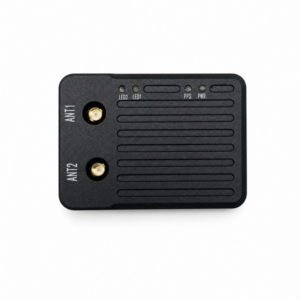
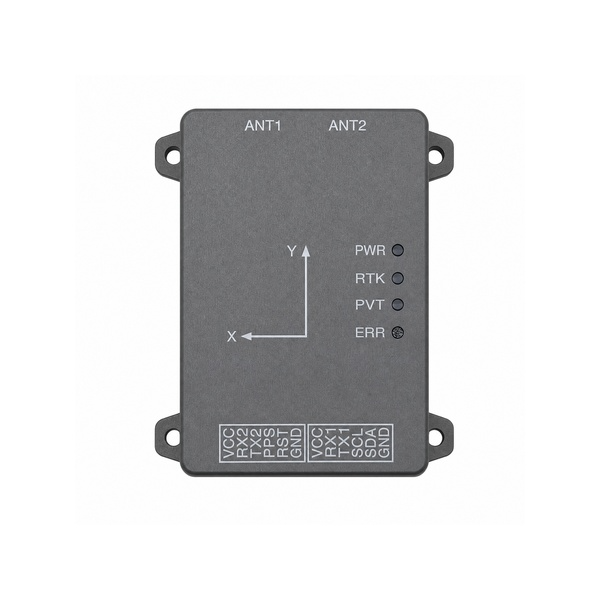
- Dual UART (GH1.25-6P) · I²C · PPS · EVENT · dual straight MMCX antenna ports
- Compact: 65.5 × 58.4 × 13.7 mm · 86 g · 5–12 V DC
Performance Specifications
| Parameter | Value |
|---|---|
| GNSS Engine | Septentrio mosaic-G5 P3H |
| Tracking Channels | 789 hardware channels |
| GNSS Signals | GPS · BDS · GLONASS · Galileo · QZSS |
| Update Rate | 20 Hz |
| RTK Accuracy (H) | 0.6 cm + 0.5 ppm (RMS) |
| RTK Accuracy (V) | 1.0 cm + 1 ppm (RMS) |
| RTK Init Time | <7 s typical |
| RTK Reliability | >99.9% |
| Heading Accuracy | 0.15° @ 1 m baseline |
| Standalone (H/V) | 1.2 m / 1.9 m |
| DGNSS (H/V) | 0.4 m / 0.7 m |
| Cold TTFF | <35 s |
| PPS Timing | 1.4 ns (RMS) |
| Velocity Accuracy | 3 cm/s (RMS) |
| Output Protocols | Septentrio SBF · NMEA 0183 v2.3/v3.03/v4.0 · RTCM v3.x (MSM) |
Interface & Connectivity
| Port | Connector | Signals |
|---|---|---|
| UART1 | GH1.25-6P | VCC · RXD1 · TXD1 · I²C_SCL · I²C_SDA · GND |
| UART2 | GH1.25-6P | VCC · RXD2 · TXD2 · PPS · EVENT · GND |
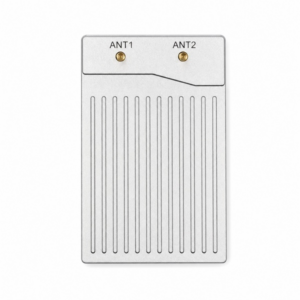
| ANT1 (Main) | MMCX straight | Primary position/heading antenna |
| ANT2 (Aux) | MMCX straight | Auxiliary heading antenna |
Electrical & Environmental
| Parameter | Specification |
|---|---|
| Supply Voltage | 5–12 V DC |
| Operating Current | 300–1,000 mA @ 12 V |
| Max VCC Ripple | 500 mV |
| ESD Withstand | ±2,000 V |
| Operating Temperature | −40°C to +95°C |
| Storage Temperature | −55°C to +95°C |
| Humidity | 95% RH, non-condensing |
| Vibration | MIL-STD-810H 514.8 Category 4 |
| Shock | GJB150.18-2009 / MIL-STD-810H 516.8 Proc. I |
| Dimensions | 65.5 × 58.4 × 13.7 mm (module: 48 × 35 × 12.6 mm) |
| Weight | 86 g |
Target Applications
The HB51 is optimised for platforms where heading accuracy and positioning resilience are both critical: UAVs operating in constrained airspace, AGVs and mobile robots navigating dynamic indoor/outdoor environments, ADAS testing rigs, unmanned surface vehicles (USV), and construction machinery requiring precise machine control. The RM3100 magnetic sensor provides backup heading when the GNSS baseline is unavailable, while U-Fusion MEMS integration bridges position during signal gaps.