Introduction
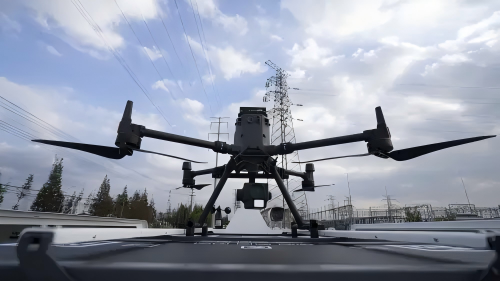
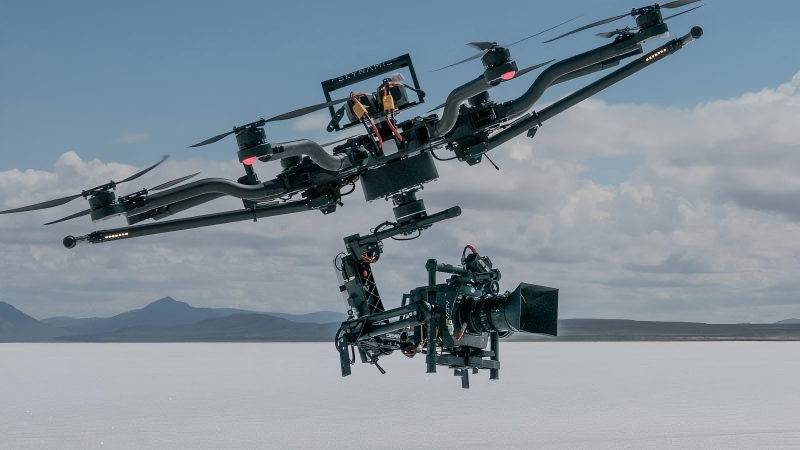
In an era where the film and television industry is reaching unprecedented heights, professional-grade drone aerial photography has become an indispensable visual language tool for creating content across movies, TV series, documentaries, and even short videos. The precision, stability, and repeatability of its flight directly determine the expressive power of cinematography, the visual impact of shots, and the flexibility of post-production. However, traditional GNSS modules often fall short on film sets pursuing ultimate image quality. Shooting amid dense urban buildings faces severe multipath interference and signal blockage, causing unpredictable micro-shakes in footage. While majestic outdoor locations like mountains, canyons, or coastlines offer stunning backdrops, they also carry risks of weak signals and frequent signal loss. Complex special effects shots demand drones to repeat predetermined trajectories with centimeter-level precision, while dynamic sequences like high-speed vehicle tracking or aerial circling push the system’s real-time responsiveness and latency tolerance to their limits. Furthermore, extended outdoor shoots and tight production schedules pose severe challenges to device endurance and reliability.
Core Technical Advantages of the Septentrio mosaic-X5
These creative pain points were fundamentally resolved only with the advent of the Septentrio mosaic-X5 GNSS module. Compared to other positioning modules on the market, the mosaic-X5 establishes four dimensions of overwhelming technical superiority in aerial cinematography applications: First, its unparalleled signal reception capability and robustness, achieved through 448 hardware channels enabling simultaneous tracking of multi-frequency signals across all constellations including GPS, GLONASS, BeiDou, Galileo, and QZSS. This “omnidirectional, seamless” reception capability ensures stable, continuous centimeter-level satellite positioning for drones—whether navigating dense urban skyscrapers or remote natural landscapes with weak signals—providing a robust technical foundation for directors and cinematographers to execute complex camera movements.

Advanced GNSS+ Interference Suppression Technologies
Second is its proprietary GNSS+ intelligent anti-interference and error suppression technology suite. The AIM+ advanced anti-interference and anti-spoofing technology acts as an “electronic guardian on set,” automatically identifying and suppressing electromagnetic interference from other electronic devices, communication base stations, or radio equipment at the filming location. This ensures flight control commands and positioning data remain precise and error-free even in complex electromagnetic environments. APME+ multipath suppression technology acts as a “master of image stability,” precisely filtering out misleading signals reflected off architectural glass facades, vehicle paintwork, or water surfaces. This fundamentally eliminates core hazards causing minor image jitter and flight path drift. Meanwhile, LOCK+ technology ensures the core tracking loop maintains exceptional robustness during high-speed S-curve maneuvers, rapid ascents/descents, or sudden gusts, providing foundational stability for capturing cinematic-grade smooth footage.
RTK Precision & Ultra-Low Power Performance
Most groundbreaking is its industry-leading RTK performance, achieving astonishing horizontal accuracy of 0.6cm + 0.5ppm with initialization in just 7 seconds. This enables film drones to achieve true centimeter-level precision hovering, repeat complex flight paths, and precisely recreate scenes across multiple shooting days. It delivers unprecedented spatial consistency for special effects shot stitching, multi-camera synchronization, and post-production. Furthermore, its ultra-low power consumption and extensive interface configuration perfectly accommodate the multi-device collaboration and extended outdoor operation demands common in film production.
Real-World Film & Broadcast Applications
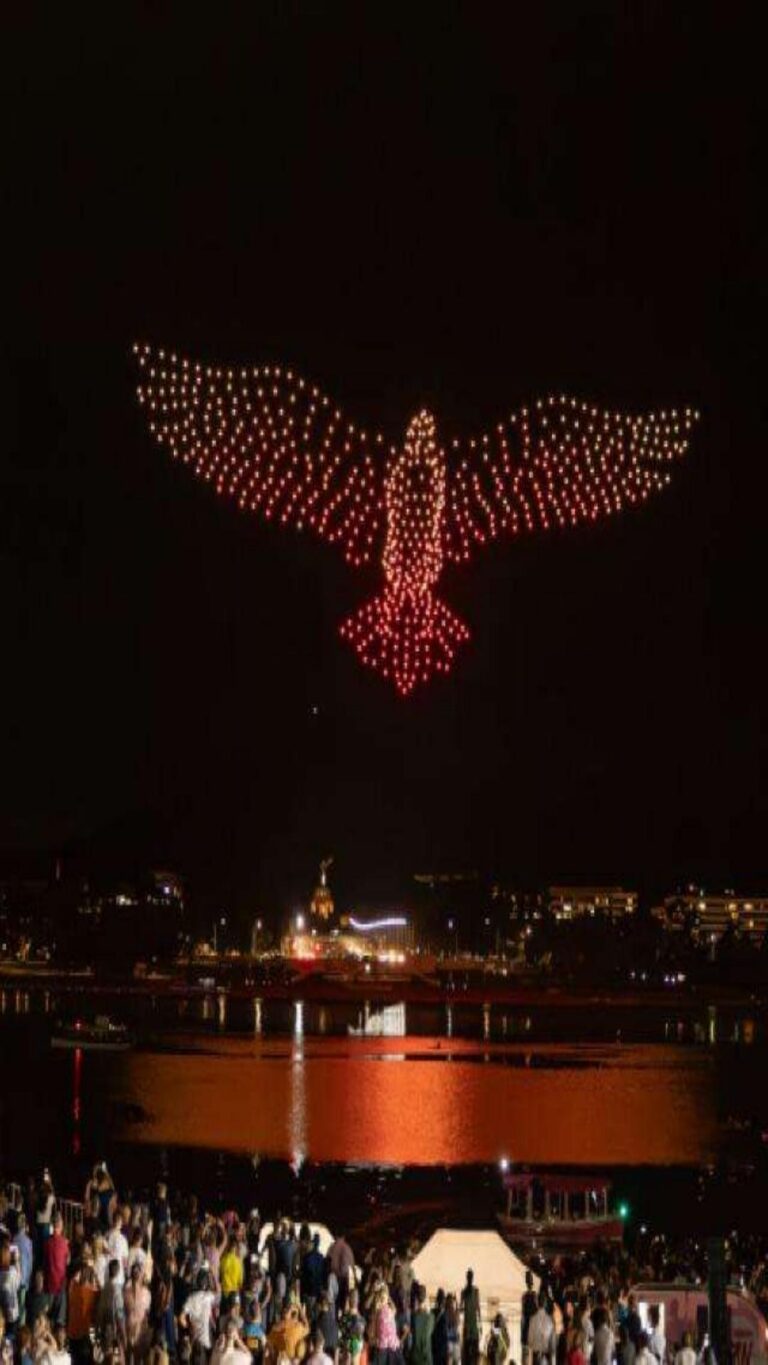
The powerful performance of the Septentrio mosaic-X5 GNSS module, when applied to real-world filmmaking scenarios, delivers revolutionary creative freedom and efficiency gains. During the filming of large-scale cinematic effects shots, the module’s ultra-high 100Hz positioning update rate and event marking accuracy of less than 20 nanoseconds ensure that every frame captured by the high-frame-rate cinematography camera mounted on the drone achieves microsecond-level synchronization with centimeter-level spatial position, aircraft attitude, and gimbal angle data. This not only provides visual effects teams with flawlessly consistent spatial data for compositing CG elements and integrating virtual environments, but also empowers cinematographers to boldly design and precisely execute once-impossible shots—such as “flying through narrow windows,” “ground-hugging high-speed car chases,” or “complex trajectories circling protagonists.” This dramatically expands the boundaries of cinematic storytelling.
In documentary or commercial filming, centimeter-level absolute positioning accuracy combined with rapid system response enables drones to precisely replicate identical flight paths over the same scene under varying times and lighting conditions. This ensures seamless continuity in footage across tone, lighting, and composition, substantially boosting production efficiency and visual quality. During large-scale live broadcasts or aerial filming for variety shows, the drone’s exceptional dynamic performance and rapid reacquisition capability (averaging 1 second) ensure stable positioning and attitude recovery when navigating dense obstacles or experiencing temporary signal blockage. This guarantees smooth and secure live footage, preventing broadcast mishaps.
Crucially, the Septentrio mosaic-X5 GNSS module’s ultra-low power consumption (typical power draw of just 0.6W) directly translates to extended flight durations. This allows drones to capture more fleeting golden moments or execute complex long-take designs without interrupting creative flow through frequent battery swaps. Its broad industrial-grade operating temperature range (-40°C to +85°C) ensures stable drone performance across global extreme climates—from frozen wildernesses to tropical deserts—providing robust technical assurance for production teams shooting across regions and seasons.
Industry Value & Competitive Advantage
Therefore, integrating the Septentrio mosaic-X5 GNSS module is far more than upgrading a navigation component for film drones—it injects a powerful “precision control core” and “visual language enabler” into the entire filmmaking workflow. In today’s fiercely competitive film industry, where audiences demand increasingly sophisticated visual quality, absolute image stability, precise controllable shots, and efficient, reliable filming have become critical factors determining a production’s success and a team’s professionalism.
With its top-tier performance validated across numerous professional film projects, exceptional robustness in extreme shooting environments, and seamless integration into industrialized film workflows, the Septentrio mosaic-X5 GNSS module offers a strategic tool for film studios, professional aerial teams, advertising agencies, and content creators. It significantly elevates visual quality, reduces shooting risks, and expands creative horizons. While your competitors struggle with budget overruns and extended timelines due to positioning drift causing minor shot imperfections, post-production challenges from inconsistent trajectory replication, or shooting interruptions from unstable signals, you can leverage the stable, precise, and reliable positioning and navigation capabilities of the Septentrio mosaic-X5 GNSS module to create aerial shots that set the standard in visual impact, technical execution, and artistic expression.
This establishes an absolute technological advantage and brand reputation in highly demanding fields such as high-end film production, large-scale brand advertising, and top-tier documentary filming. It represents not merely an innovation in navigation technology, but a solemn commitment to the ultimate pursuit of cinematic artistry: a promise that every flight precisely executes the director’s vision, every shot achieves cinematic-grade stability, and every capture becomes a defining moment that elevates the work’s value.
Summary
• Application: Professional film, television, documentary, and commercial aerial cinematography.
• Accuracy: 0.6 cm + 0.5 ppm RTK horizontal accuracy, 7 s RTK initialization.
• Performance: 100 Hz update rate, <20 ns event marking accuracy.
• Technologies: AIM+ anti-interference, APME+ multipath suppression, LOCK+ anti-vibration.
• Hardware: 448 channels, multi-constellation & multi-frequency GNSS.
• Endurance: 0.6 W ultra-low power, -40°C to +85°C industrial-grade operation.