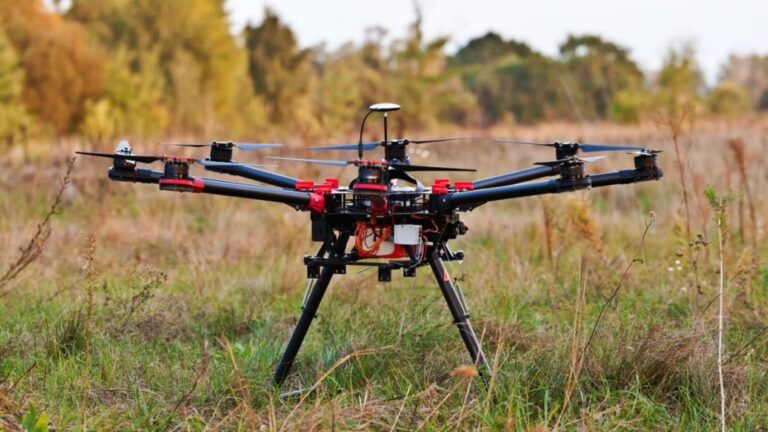
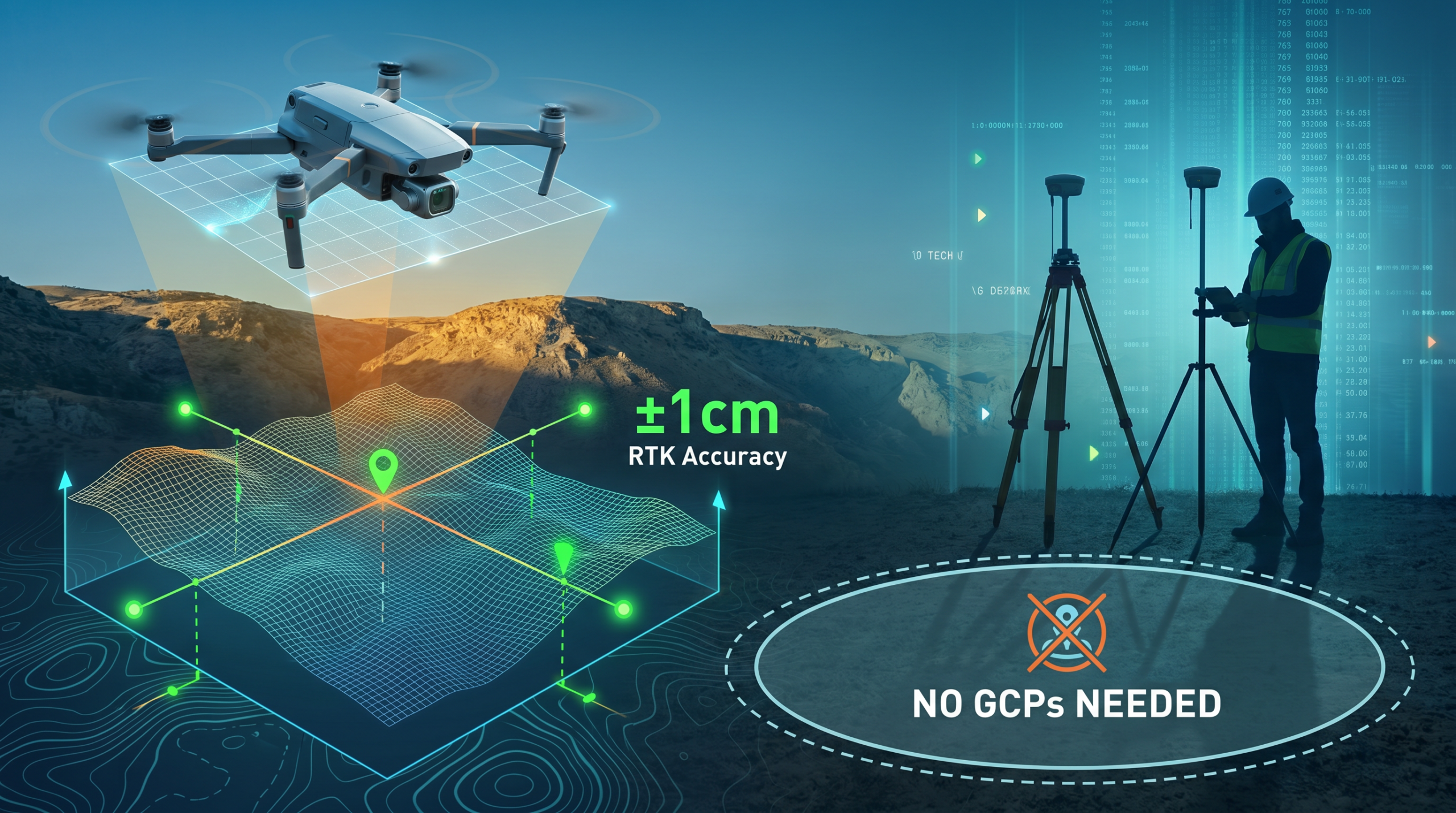
This case study demonstrates how RTK accuracy without GCPs is achievable for UAV mapping companies with the right GNSS receiver technology. In the world of aerial surveying, accuracy is everything. A two-centimeter error at altitude can translate into half a meter of ground distortion — enough to render an entire deliverable useless for engineering-grade projects. For one growing UAV mapping company based in Southeast Asia, the gap between “good enough” and “survey-grade” was costing them high-value infrastructure contracts.
This is the story of how they closed that gap — and how the right GNSS receiver made all the difference.
The Challenge: GCP-Dependent Workflows
Like many UAV operators, this company relied heavily on ground control points (GCPs) to post-process their aerial data. Each project required field crews to place and survey dozens of physical targets before every flight — a costly, time-consuming process that limited how many projects they could take on per month.
Their existing PPK workflow was inconsistent, often drifting beyond ±5cm even with careful base station setup. For clients in road construction and land development, that margin of error was unacceptable.
The Solution: Enter the HB21 GNSS Receiver
They turned to the HB21 GNSS Box Receiver, a multi-frequency, multi-constellation receiver powered by the latest Septentrio technology. The HB21 is built specifically for demanding UAV and mobile mapping applications, offering full L-Band correction support and centimeter-level accuracy out of the box.
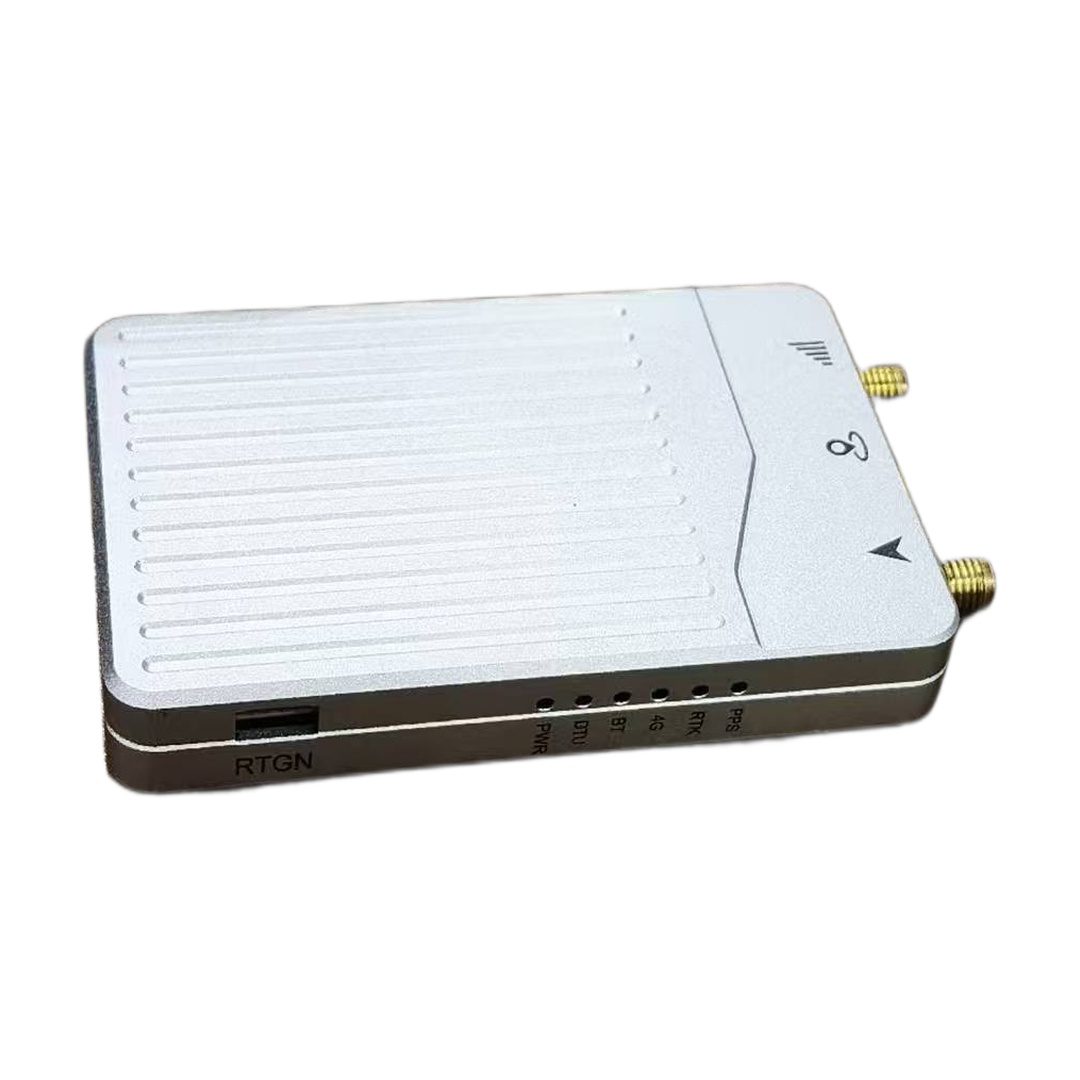
Key features that made the difference:
- Full constellation tracking — GPS, GLONASS, Galileo, BeiDou, and QZSS simultaneously
- Advanced multipath rejection — critical for urban and forest-edge environments
- L-Band corrections — no base station required for RTK-level accuracy
- Robust IP67 enclosure — built for field deployment in any weather
Rtk accuracy without gcps: The Results
After integrating the HB21 into their WingtraOne and DJI M300 workflows, the results were immediate:
- ±1.2cm vertical accuracy consistently across all test flights
- ±0.8cm horizontal accuracy — exceeding engineering-grade requirements
- Zero GCPs needed — saving 6–10 hours of field time per project
- Project throughput increased by 40% within the first quarter
“We stopped debating whether our data was survey-grade and started focusing on delivering more projects,” the company’s operations lead told us. “The HB21 simply works.”
Why Septentrio-Powered Receivers Matter
At the heart of the HB21 lies the Septentrio mosaic-X5 GNSS module, a cutting-edge dual-frequency chipset designed for high-integrity positioning. The same module also powers the M56 GNSS Box Receiver, another excellent choice for UAV operators who need a compact, lightweight solution without compromising on accuracy.
For projects requiring ultra-high precision over longer baselines, the EV322 GNSS Receiver offers dual-antenna heading and advanced RTK capabilities. Powered by the Septentrio mosaic-G5 module, it’s ideal for marine survey and large-area corridor mapping.
Is This Workflow Right for You?
If your UAV surveying operation is bottlenecked by GCP placement, struggling with inconsistent accuracy, or looking to scale project volume without scaling field crews, a Septentrio-powered receiver could be your next competitive advantage.
The company featured in this story now handles twice the projects with the same team — and their clients consistently report ±1cm accuracy on final deliverables. No GCPs. No compromises.
Frequently Asked Questions
Q: Can the HB21 work with any UAV platform?
A: Yes. The HB21 supports standard NMEA and RTCM protocols, making it compatible with WingtraOne, DJI, Autel, and custom UAV builds.
Q: Can I achieve RTK accuracy without GCPs with any GNSS receiver?
A: No. You need a receiver with RTK capabilities, such as the Septentrio mosaic-X5 module used in our HB21 series, for reliable RTK accuracy without GCPs.
Q: Do I still need a base station?
A: With L-Band correction support, you can achieve RTK-level accuracy without a local base station. For the highest precision, a base station or NTRIP corrections can be used as a supplement.
Q: How does the M56 compare to the HB21?
A: The M56 is more compact and lighter — ideal for smaller UAVs and quick-deployment scenarios. Both use the same Septentrio mosaic-X5 module, so core accuracy is identical. See the M56 product page for full specs.
Q: What accuracy can I expect with the EV322?
A: The EV322 delivers RTK-level accuracy (<1cm) with the added benefit of dual-antenna heading for moving platforms, making it the top choice for marine and mobile mapping applications.