Why Industrial Cleaning Drones Need Resilient GNSS Near Building Surfaces
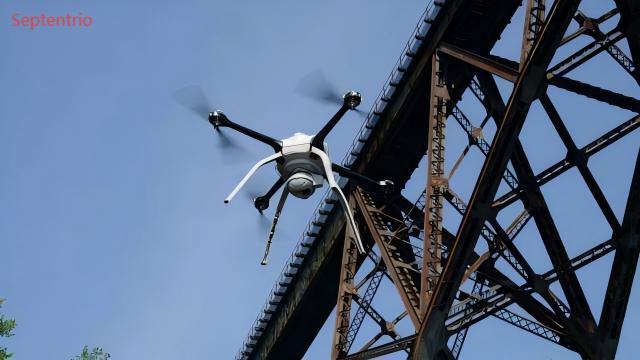
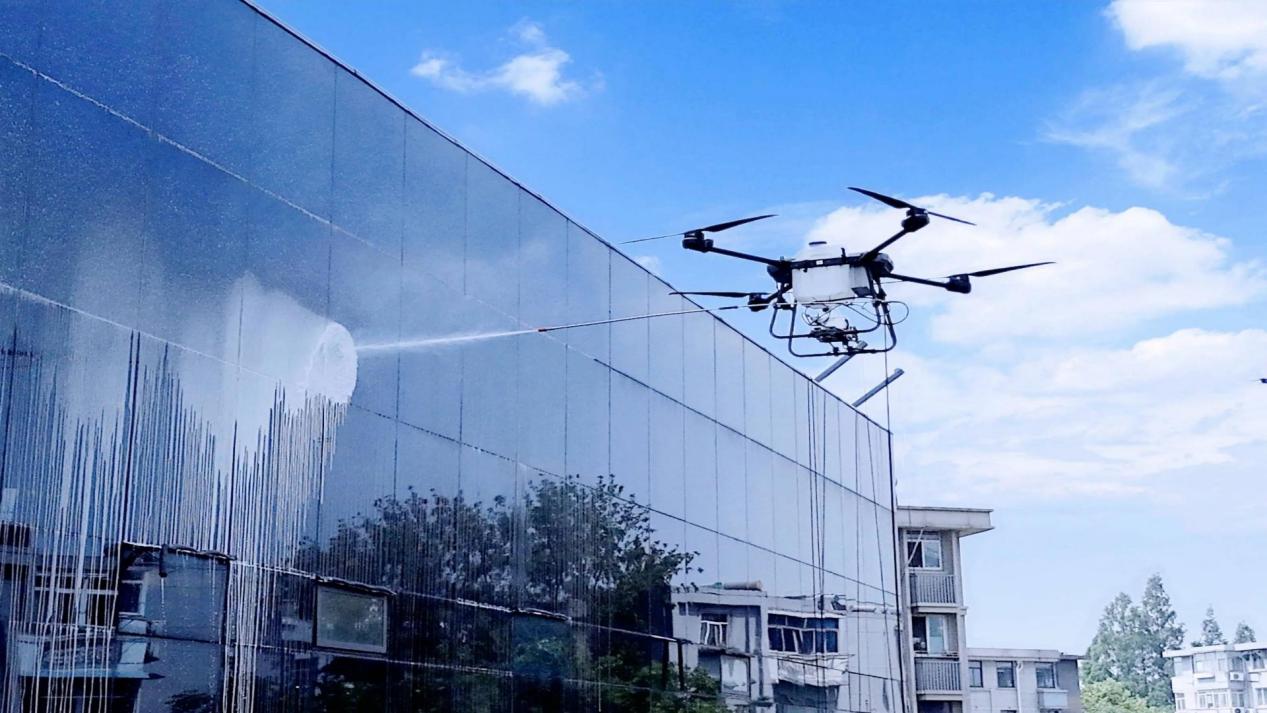
Industrial cleaning drones operate in one of the most GNSS-hostile environments imaginable — mere meters from building facades, glass curtain walls, and metal infrastructure. When a high-rise window cleaning drone is navigating within centimeters of glass surfaces, signal reflections and multipath errors can degrade positioning accuracy from centimeters to several meters in an instant.
Standard GNSS receivers cannot distinguish between direct satellite signals and their reflections off walls, windows, and structural elements. For cleaning drones operating near sensitive building surfaces, this means a real risk of collisions, incomplete coverage, or safety incidents. A GNSS receiver purpose-built for near-building navigation is not optional — it is essential for reliable industrial cleaning operations.
For a complete overview of solutions, explore Septentrio-powered GNSS receivers at uav-gnss.com.
The Septentrio Mosaic-G5 P3H: Purpose-Built for Near-Building GNSS Navigation
The Multipath Challenge Near Building Surfaces
When cleaning drones operate close to building surfaces, GNSS signals bounce off walls, glass facades, and window frames, creating multipath errors that can reach several meters. The closer a drone flies to a surface, the more severe the reflection problem becomes. Standard receivers cannot differentiate between the true direct signal and its reflected copy, causing position drift that makes precise flight path execution impossible.
Research published in MDPI Sensors (2024) demonstrated that RTK GNSS positioning near tall walls shows highly variable quality, with false fixes and extended re-acquisition times of 9-13 seconds after passing obstacles. This is precisely the challenge industrial cleaning drone operators face in daily operations.
AIM+ Multipath Rejection: How It Works
The mosaic-G5 P3H incorporates Septentrio’s APME+ multipath suppression technology, which analyzes signal characteristics to identify and reject reflected signals. This ensures that the receiver uses only direct line-of-sight signals for position calculation, maintaining centimeter-level accuracy even when operating within meters of building surfaces. This technology is validated in real-world deployments — Septentrio’s customer AGR uses the mosaic-G5 P3 in their facade cleaning drones for safe near-wall navigation.
Learn more about AIM+ resilient GNSS technology for interference-free drone operations.
Key Specifications for Industrial Cleaning
| Specification | Details |
|---|---|
| Constellations | GPS, GLONASS, Galileo, BeiDou, QZSS |
| RTK Accuracy | Centimeter-level (8 mm + 1 ppm) |
| Multipath Rejection | AIM+ with APME+ technology |
| Anti-Jamming | Built-in interference mitigation |
| Heading | Dual-antenna real-time heading |
| Update Rate | Up to 100 Hz |
| Operating Temp | -40°C to +85°C |
Key Applications for Industrial Cleaning Drones
High-Rise Window and Facade Cleaning
For high-rise window cleaning, the drone must maintain a precise standoff distance from the glass surface while executing vertical and horizontal cleaning passes. Dual-antenna heading provides 0.03° accuracy, ensuring the drone maintains correct orientation relative to the building surface throughout the cleaning pattern.
Solar Panel Cleaning on Commercial Roofs
Solar panel cleaning requires precise navigation across rooftop arrays without damaging sensitive panels. The mosaic-G5 P3H’s APME+ multipath suppression ensures reliable positioning near rooftop equipment and reflective panel surfaces, enabling automated cleaning with centimeter accuracy.
The EV322 GNSS Receiver, integrating the mosaic-G5 P3H, provides plug-and-play compatibility with PX4 and ArduPilot flight controllers for cleaning drone integration.
Industrial Storage Tank Cleaning
Cleaning the exterior surfaces of large storage tanks in refineries and industrial facilities presents unique GNSS challenges. The curved metal surface creates severe multipath conditions. The mosaic-G5 P3H maintains fix reliability where standard receivers fail.
Like the mosaic-G5 P3H used in industrial inspection drone applications, this receiver shares the same GNSS+ technology suite for reliable operation near metal structures and building surfaces.
Low Power and Integration for Extended Cleaning Missions
Industrial cleaning missions often require extended flight endurance to complete large surface areas in a single operation. With ultra-low power consumption (0.6 W typical for dual-antenna operation), the mosaic-G5 P3H minimizes battery drain. Its compact 22.8 × 16.4 × 2.4 mm footprint and 2.2 g weight make it ideal for integration into space-constrained drone platforms.
The module supports standard RINEX and RTCM data formats, ensuring compatibility with all major flight controller systems. The PX4 documentation for Septentrio integration provides detailed setup guidance for cleaning drone developers.
Why the Mosaic-G5 P3H Is the Right GNSS Receiver for Industrial Cleaning Drones
- APME+ multipath suppression for accurate positioning near building surfaces
- AIM+ anti-interference for urban RF environments with dense wireless and 5G infrastructure
- Centimeter-level RTK accuracy for safe standoff distance from building surfaces
- Dual-antenna heading with 0.03° accuracy for precise orientation
- Ultra-low 0.6 W power consumption for extended cleaning missions
- Compact 2.2 g weight for weight-sensitive cleaning drone platforms
- Plug-and-play compatibility with PX4 and ArduPilot flight controllers
- Validated in real-world facade cleaning drone deployments (AGR/Septentrio)
For cleaning service providers transitioning to autonomous drone operations, the Septentrio mosaic-G5 P3H delivers the reliable near-building navigation performance that professional cleaning operations demand.
Frequently Asked Questions
Q: Why is multipath rejection important for industrial cleaning drones?
A: Cleaning drones operate close to building surfaces where GNSS signal reflections off walls, glass, and metal cause position errors. Multipath rejection is essential for maintaining centimeter accuracy near structures.
Q: What accuracy can the mosaic-G5 P3H achieve near building surfaces?
A: With AIM+ APME+ technology, it maintains centimeter-level RTK accuracy (8 mm + 1 ppm) even in multipath-heavy environments near walls and structures, validated in real-world facade cleaning deployments.
Q: Is the EV322 compatible with PX4 and ArduPilot?
A: Yes. The EV322 works with any drone running PX4 or ArduPilot firmware via standard UART interface, with official Septentrio integration documentation available.
Q: Can this receiver handle interference from urban wireless infrastructure?
A: Yes. AIM+ anti-interference technology actively monitors and suppresses interference from 5G base stations, wireless networks, and other urban RF sources — maintaining reliable positioning in dense city environments.
Related GNSS Products
- EV322 GNSS Receiver — Lightweight RTK receiver for industrial cleaning drones and autonomous systems
- HB21 GNSS Box Receiver — All-in-one RTK receiver with integrated 4G LTE, heading, and data logging
- HB6 GNSS Box Receiver — Compact quad-constellation RTK receiver powered by Septentrio Mosaic X5
- AIM+ Anti-Jamming Technology — Advanced interference and spoofing protection
Browse our full GNSS receiver collection for professional UAV applications.