When it comes to professional drone navigation, the GNSS receiver is the single most important component for positioning accuracy. And when professionals talk about the gold standard in GNSS technology, one name comes up consistently: Septentrio.
Swiss-engineered and trusted by industries ranging from precision agriculture to defense, Septentrio GNSS modules deliver the reliability, accuracy, and resilience that professional UAV operations demand. This article explores what makes Septentrio GNSS technology for drones the best choice, and why it powers the most advanced UAV GNSS receivers on the market.
1. What Makes Septentrio GNSS Technology Different from Other GNSS Brands?
Septentrio isn’t just another GNSS chip manufacturer. Based in Leuven, Belgium, the company has been at the forefront of high-precision GNSS technology since 2000. Unlike consumer-grade GPS modules that optimize for cost, Septentrio designs every module for maximum performance, reliability, and security.
Key differentiators:
- Swiss engineering pedigree: Rigorous quality control and testing for industrial and defense applications.
- AIM+ anti-jamming technology: Patented interference mitigation that’s battle-tested in military environments.
- Multi-frequency, multi-constellation support: Tracks GPS, GLONASS, BeiDou, Galileo, and more simultaneously.
- High update rates: Up to 100 Hz for demanding dynamic applications like drones.
- Long product lifecycles: Modules stay in production for years, ensuring supply chain stability.
As a leading Septentrio GNSS receiver supplier, UAV GNSS integrates these modules into ready-to-use receivers for the drone industry, making professional-grade positioning accessible to UAV operators worldwide.
2. How Does Septentrio AIM+ Anti-Jamming Protect Your Drone?
One of Septentrio’s most powerful features is AIM+ (Advanced Interference Mitigation). This is not just a filter — it’s an intelligent system that continuously monitors the RF spectrum and actively cancels interference.
How AIM+ works:
- Real-time spectral analysis: The system scans the GNSS frequency bands for interferers.
- Adaptive notch filtering: Identifies and removes narrowband and wideband interference without affecting genuine signals.
- Automatic reconfiguration: If interference patterns change, AIM+ adapts in milliseconds.
For drone operators, this means your GNSS receiver keeps working even near radio towers, power lines, or in environments with intentional jamming. To learn more, read about our AIM+ anti-jamming technology and how it protects your drone navigation system.
This is particularly important for commercial drone applications where loss of GPS could mean a crashed drone or failed mission. When evaluating a drone navigation system, anti-jamming capability should be high on your priority list.
3. Why Multi-Constellation Support Matters for Drone Navigation
A standard GPS module tracks only the US GPS constellation. A Septentrio-powered UAV GNSS receiver tracks GPS, GLONASS, BeiDou, Galileo, and others simultaneously — often 40+ satellites at once.
The practical benefits for drone navigation:
- Better accuracy in difficult environments: More satellites mean better geometry and more precise fixes, especially in urban canyons or near trees.
- Faster time-to-first-fix (TTFF): With more satellites visible, the receiver locks onto a position faster after power-up.
- Continuous operation during outages: If one constellation has issues, others seamlessly take over.
- Global operability: Your drone works reliably anywhere in the world, from rural Asia to European cities.
For professional drone operators flying missions across different regions, multi-constellation support is not a luxury — it’s a requirement. A centimeter level GNSS solution from Septentrio delivers this out of the box.
4. Septentrio Mosaic-X5 vs Mosaic-G5: Which Module Is Right for Your UAV?
Septentrio offers two main module families for UAV applications: the Mosaic-X5 and the Mosaic-G5. Both are excellent, but they serve slightly different use cases.
| Feature | Mosaic-X5 | Mosaic-G5 |
|---|---|---|
| Constellations | GPS, GLONASS, BeiDou, Galileo | GPS, GLONASS, BeiDou, Galileo |
| AIM+ Anti-Jamming | Yes | Yes |
| Update Rate | Up to 100 Hz | Up to 100 Hz |
| Heading (Dual Antenna) | Yes | No |
| Form Factor | Larger, more I/O | Compact, lightweight |
| Best For | Professional/enterprise UAVs, survey boats | Compact drones, lightweight applications |
Choose Mosaic-X5 if: You need heading (dual-antenna), maximum performance, and are flying larger UAVs that can accommodate the module.
Choose Mosaic-G5 if: You need a compact, lightweight GNSS solution for smaller drones, and don’t require heading.
The HB21 GNSS Box Receiver uses the Mosaic-X5 for maximum performance, while the EV322 uses the Mosaic-G5 for compact drone applications. Both deliver exceptional RTK GPS receiver performance.
5. Real-World Performance: Septentrio GNSS in Professional Drone Operations
Numbers on a spec sheet are one thing. Real-world performance is what matters. Here are examples of how Septentrio GNSS technology for drones performs in actual operations:
Surveying and Mapping
Operators using Septentrio-powered receivers consistently achieve 1 cm RMSE on checkpoints in photogrammetry surveys. The multi-constellation support ensures consistent accuracy even in challenging terrain.
Precision Agriculture
In precision agriculture, where spray accuracy and crop mapping depend on centimeter-level positioning, Septentrio receivers maintain lock even when flying low over crops with high electromagnetic interference from agricultural equipment nearby.
Infrastructure Inspection
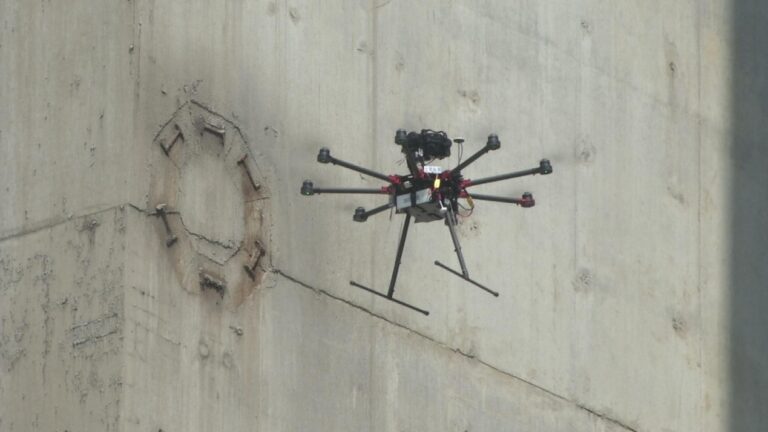
Inspecting power lines, cell towers, and bridges often means flying near strong RF sources. Septentrio’s AIM+ keeps the GNSS receiver for professional drones locked and accurate, where other receivers would lose position.
GNSS receiver for professional drones should be judged by real-world reliability, not just laboratory specs. Septentrio consistently delivers in the field.
6. How to Integrate Septentrio GNSS Receivers with ArduPilot and PX4
Septentrio-powered receivers integrate seamlessly with the two most popular open-source flight control platforms: ArduPilot and PX4.
Integration with ArduPilot
ArduPilot has native support for Septentrio GNSS receivers. Connect via UART, configure the baud rate, and the receiver is recognized automatically. Key settings include:
- GPS_TYPE = 9 (Septentrio)
- Serial protocol configuration for RTCM input/output
- Base station or rover mode selection
Integration with PX4
PX4 also supports Septentrio receivers through its GPS driver. Connect via UART or USB, and configure the parameters in QGroundControl. RTK corrections can be streamed via MAVLink or direct UART connection to a base station.
For detailed setup instructions, refer to our Septentrio GNSS integration guide on GitHub, which covers wiring diagrams, parameter configurations, and troubleshooting for both ArduPilot and PX4 platforms.
7. Where to Buy Septentrio GNSS Receivers for Your Drone
Ready to upgrade your drone’s navigation? UAV GNSS is your trusted source for Septentrio-powered receivers. As a specialized supplier, we offer:
- Genuine Septentrio modules: Every receiver uses authentic Septentrio technology.
- Expert guidance: Our team helps you choose the right receiver for your specific drone and application.
- Comprehensive support: Documentation, integration guides, and responsive customer service.
- Competitive pricing: Professional-grade positioning at prices that make sense for your business.
Learn more about UAV GNSS and our commitment to bringing high-precision UAV GNSS technology to professional drone operators worldwide.
Browse our GNSS receiver category to explore the full range of Septentrio-powered receivers, from compact modules to enterprise-grade solutions.
Septentrio GNSS technology for drones represents the pinnacle of precision navigation. Whether you’re surveying land, inspecting infrastructure, or managing crops, a Septentrio-powered receiver gives you the accuracy, reliability, and resilience your operations demand.
Shop Septentrio GNSS Receivers
- HB21 GNSS Box Receiver — Powered by Septentrio Mosaic X5
- HB6 GNSS Box Receiver — Powered by Septentrio Mosaic X5
- EV322 GNSS Receiver — Powered by Septentrio mosaic-G5
About the Author: Jack is a GNSS integration specialist with over 6 years of experience working with Septentrio receivers, RTK positioning, and UAV navigation systems.