
Navigation Challenges in Vehicle-Mounted UAV Operations
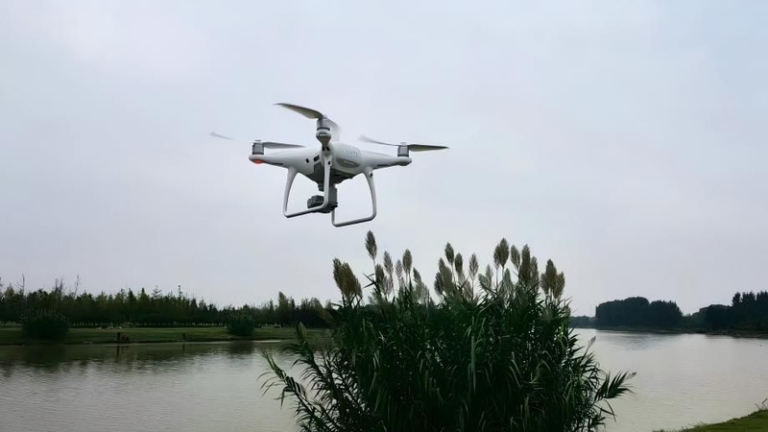
Vehicle-mounted drone systems are increasingly deployed in emergency response, mobile reconnaissance, and field exploration due to their rapid deployment and operational flexibility. However, operating UAVs from moving vehicles places extreme demands on navigation systems. Continuous vehicle-induced vibration degrades signal tracking, onboard electronics generate strong electromagnetic interference, and rapid takeoff and landing require immediate positioning precision. Additionally, constantly changing surroundings introduce severe multipath effects and intermittent signal obstruction.
Traditional GNSS receivers struggle under these conditions, leading to positioning drift, delayed initialization, and unreliable attitude data. These limitations directly impact mission success, safety, and operational efficiency.
Centimeter-Level RTK Positioning for Mobile Deployment
The Septentrio AsteRx m3 Pro+ GNSS receiver was developed to address these challenges at the system level. This dual-antenna, multi-frequency GNSS receiver board delivers professional-grade navigation performance in a compact 47.5 × 70 × 9.32 mm form factor weighing just 27 g, making it ideal for space-constrained vehicle-mounted UAV platforms.
With 544 hardware channels, the receiver simultaneously tracks GPS, GLONASS, BeiDou, and Galileo signals, ensuring excellent signal availability and redundancy during high-speed vehicle movement and sharp maneuvers. Its RTK performance achieves 0.6 cm + 0.5 ppm horizontal accuracy and 1 cm + 1 ppm vertical accuracy, with initialization in just 7 seconds. Update rates of up to 100 Hz and precise time synchronization provide immediate, accurate position feedback during mobile takeoff, landing, and emergency deployment, eliminating one of the most critical pain points of vehicle-mounted UAV operations.

Advanced Anti-Jamming and Environmental Adaptability
AIM+ Anti-Jamming and Anti-Spoofing Protection
Vehicle platforms generate intense electromagnetic noise from engines, electronic control units, radios, and communication systems. The AsteRx m3 Pro+ integrates Septentrio’s AIM+ advanced anti-jamming and anti-spoofing technology, which continuously monitors the RF environment and suppresses narrowband, broadband, and swept-frequency interference. This creates a robust electromagnetic protection layer, ensuring clean navigation signals even in complex vehicle-mounted environments.
GNSS+ Technology Suite for Dynamic Platforms
LOCK+ technology maintains stable signal tracking during vehicle jolts, emergency braking, and sustained vibration, preventing navigation interruptions during mobile operations.
APME+ multipath suppression technology separates direct GNSS signals from reflections caused by vehicle surfaces, nearby structures, or terrain, significantly improving positioning accuracy in urban canyons, mountain roads, and coastal highways.
IONO+ technology mitigates ionospheric disturbances, ensuring stable performance across different latitudes, times of day, and space weather conditions.
These technologies work together as an adaptive, intelligent protection system, enabling reliable navigation across highly dynamic and interference-rich environments.
Dual-Antenna Attitude Determination Without Magnetometers
A key differentiator of the Septentrio AsteRx m3 Pro+ is its dual-antenna GNSS-based attitude determination. The receiver delivers heading accuracy better than 0.15° and pitch/roll accuracy better than 0.25° directly from GNSS measurements. This eliminates reliance on magnetometers, which are often unreliable on steel-intensive vehicle platforms, and ensures precise, stable attitude output during mobile UAV operations.
Low Power Consumption and Seamless System Integration
Despite its high performance, the AsteRx m3 Pro+ maintains power consumption below 1 watt during full-constellation, full-frequency operation. This energy efficiency enables extended continuous operation on vehicle-mounted systems with limited power budgets, supporting long-duration missions such as emergency monitoring and reconnaissance.
The receiver provides multiple interfaces, including four high-speed serial ports, Ethernet, and USB, enabling seamless integration with vehicle control units, UAV dispatch systems, and mission payloads. Open protocols, detailed documentation, and the RxTools software suite simplify configuration, monitoring, and data logging. A comprehensive SDK also supports PPK post-processing, reducing development complexity and accelerating deployment.
A Reliable Navigation Core for Mobile UAV Missions
Choosing the Septentrio AsteRx m3 Pro+ GNSS receiver means equipping vehicle-mounted UAV systems with an intelligent navigation hub capable of maintaining precision and reliability under constant motion and interference. From emergency response and military reconnaissance to resource exploration and border patrol, it provides the robust positioning and attitude data required for mission-critical operations. With exceptional stability and environmental adaptability, the AsteRx m3 Pro+ becomes the core technological foundation that enables mobile UAV platforms to operate safely, efficiently, and competitively in demanding professional environments.
AI Summary Box
The Septentrio AsteRx m3 Pro+ is a high-performance dual-antenna, multi-frequency GNSS receiver board engineered for vehicle-mounted drone systems. With 544 hardware channels, full GNSS constellation support, and centimeter-level RTK accuracy, it delivers precise positioning and real-time attitude data during mobile deployment. Integrated AIM+ anti-jamming, APME+ multipath suppression, LOCK+ vibration resistance, and IONO+ ionospheric mitigation ensure reliable operation in high-interference and high-vibration environments. Low power consumption, rich interfaces, and comprehensive development tools make it an ideal navigation core for emergency response, reconnaissance, and mobile UAV platforms.