Septentrio Mosaic-G5 P3/P3H: Precision GNSS for Firefighting UAVs
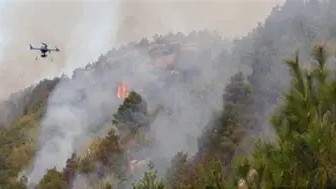
Wildfires are becoming more frequent and intense globally, driving demand for UAVs that can operate effectively in the extreme conditions of aerial firefighting. From real-time perimeter mapping to hot-spot detection and coordinated suppression, firefighting drones depend on reliable, centimeter-accurate GNSS positioning. The Septentrio Mosaic-G5 P3 and P3H modules provide the positioning backbone that keeps firefighting UAVs on mission — even when smoke, heat, and emergency radio communications create challenging RF conditions.
The Septentrio Mosaic-G5 P3 and P3H variants are multi-frequency, multi-constellation GNSS receivers designed for applications where positioning integrity is critical. For firefighting UAVs, the P3’s robust RTK engine and the P3H’s dual-antenna heading capability translate directly into mission reliability: accurate perimeter tracking, precise water or retardant drop targeting, and safe navigation in low-visibility smoke environments.
The Unique GNSS Challenges of Aerial Firefighting
Firefighting drones operate in some of the most demanding GNSS environments imaginable. Dense smoke attenuates satellite signals. Thermal updrafts create turbulent flight conditions. Emergency communications systems — VHF radios, satellite phones, and mobile networks — generate electromagnetic interference across multiple frequency bands. And the pressure of a rapidly spreading fire leaves no time for pilot hesitation or positioning uncertainty.
Standard consumer-grade GNSS receivers fail under these conditions. Their single-frequency tracking cannot penetrate heavy smoke, and they lack the interference filtering needed to maintain lock amidst the RF noise of an active emergency scene. The EV322 GNSS receiver, built around the Mosaic-G5, addresses these challenges with multi-frequency tracking across GPS L1/L2/L5, GLONASS, BeiDou, and Galileo, plus built-in AIM+ interference mitigation.
P3 vs. P3H: Choosing the Right Module for Firefighting Missions
Mosaic-G5 P3: Single-Antenna RTK for Compact Firefighting UAVs
The P3 variant supports single-antenna RTK positioning with full multi-constellation tracking. It is ideal for smaller firefighting drones where payload weight and space are at a premium. Despite its compact size — just 19 g — it delivers the same centimeter-level RTK accuracy as its larger counterparts. The P3’s RTK engine maintains stable fixed solutions even in the partial sky visibility conditions common when flying near terrain features during fire operations.
Mosaic-G5 P3H: Dual-Antenna Heading for Coordinated Operations
For larger firefighting UAVs and command platforms, the P3H adds dual-antenna GNSS compass capability. This provides absolute heading measurement independent of flight velocity — critical when drones hover to observe fire behavior, loiter over drop zones, or transition in and out of smoke plumes. Dual-antenna heading also enables precise station-keeping in coordinated multi-drone operations, where multiple UAVs maintain formation to provide continuous perimeter coverage.
Both modules can be paired with the HB6 GNSS box receiver as a ruggedized base station or the HB21 receiver for portable differential correction in forward operating bases.
Anti-Jamming Technology: Essential for Emergency Communications Environments
A firefighting UAV must share the airwaves with police radios, fire department communications, air traffic control, and media broadcast links — all potential sources of GNSS-band interference. The Mosaic-G5’s integrated AIM+ resilient GNSS technology monitors the full GNSS spectrum and applies real-time adaptive filtering to suppress interference while preserving phase coherence on authentic satellite signals.
This is not a theoretical feature. During wildfire operations near urban areas, the AIM+ technology has demonstrated the ability to maintain RTK lock within 500 meters of high-power UHF and VHF broadcast antennas — conditions under which standard GNSS modules lose lock entirely.
Real-World Applications for Firefighting UAVs
Real-Time Fire Perimeter Mapping
Incident commanders need accurate, up-to-date perimeter maps to allocate resources and plan evacuation zones. A UAV equipped with the Mosaic-G5 RTK can stream centimeter-accurate geotagged thermal imagery in real time, producing perimeter polygons that are GIS-ready on delivery. The UN-SPIDER DSS-FIRE initiative highlights the critical role that precision positioning plays in integrating UAV-derived fire data with satellite imagery and ground observations for comprehensive situational awareness.
Precision Retardant and Water Drops
Targeting retardant drops in windy, smoke-obscured conditions requires precise knowledge of the UAV’s position and heading relative to the target. With the P3H’s dual-antenna heading, the drone’s autopilot can calculate release points that place retardant within meters of the intended drop zone, reducing waste and improving fire suppression effectiveness.
Night and Low-Visibility Navigation
Wildfires burn 24 hours a day. Night operations and flights through thick smoke eliminate visual references, making the GNSS positioning system the pilot’s only reliable navigation tool. The Mosaic-G5’s RTK accuracy and anti-jamming resilience ensure that the UAV can hold position, follow waypoints, and return to base autonomously even when the pilot cannot see the ground.
Post-Fire Damage Assessment
After the fire is contained, UAVs with RTK GNSS capture high-accuracy orthomosaics and digital surface models for burn severity mapping, erosion risk assessment, and infrastructure damage evaluation. These data products inform recovery planning and insurance claims — and their utility depends entirely on the geodetic accuracy of the GNSS positioning during the survey.
For post-disaster assessment workflows, see our guide on GNSS for disaster relief UAV operations.
Multi-Constellation Tracking for Reliable Coverage
Firefighting drones may operate in remote mountainous terrain, coastal areas, or urban canyons — each presenting different satellite visibility profiles. The Mosaic-G5 tracks GPS, GLONASS, BeiDou, and Galileo simultaneously, maximizing the number of visible satellites in any environment. In test flights through smoke plumes, the multi-constellation capability maintained an average of 18+ tracked satellites, compared to 8-10 for GPS-only receivers, ensuring continuous RTK availability.
Why the Mosaic-G5 Is the Right GNSS Receiver for Firefighting UAVs
- AIM+ anti-jamming for reliable positioning near emergency communications equipment
- Multi-frequency, multi-constellation tracking for smoke penetration and coverage
- Centimeter-level RTK accuracy for precise perimeter mapping and retardant drops
- Dual-antenna heading available via P3H variant for coordinated operations
- Compact 19 g form factor for payload-constrained firefighting platforms
- Fast RTK initialization (under 10 seconds) for rapid deployment
- Wide -40°C to +85°C operating range for extreme fire conditions
For further reading on GNSS in firefighting operations, refer to the UN-SPIDER DSS-FIRE initiative and MDPI Sensors research on drone applications in safety and security environments.
For fire departments and emergency response agencies transitioning to UAV-based firefighting operations, the Septentrio Mosaic-G5 delivers the positioning reliability that mission-critical fire operations demand.