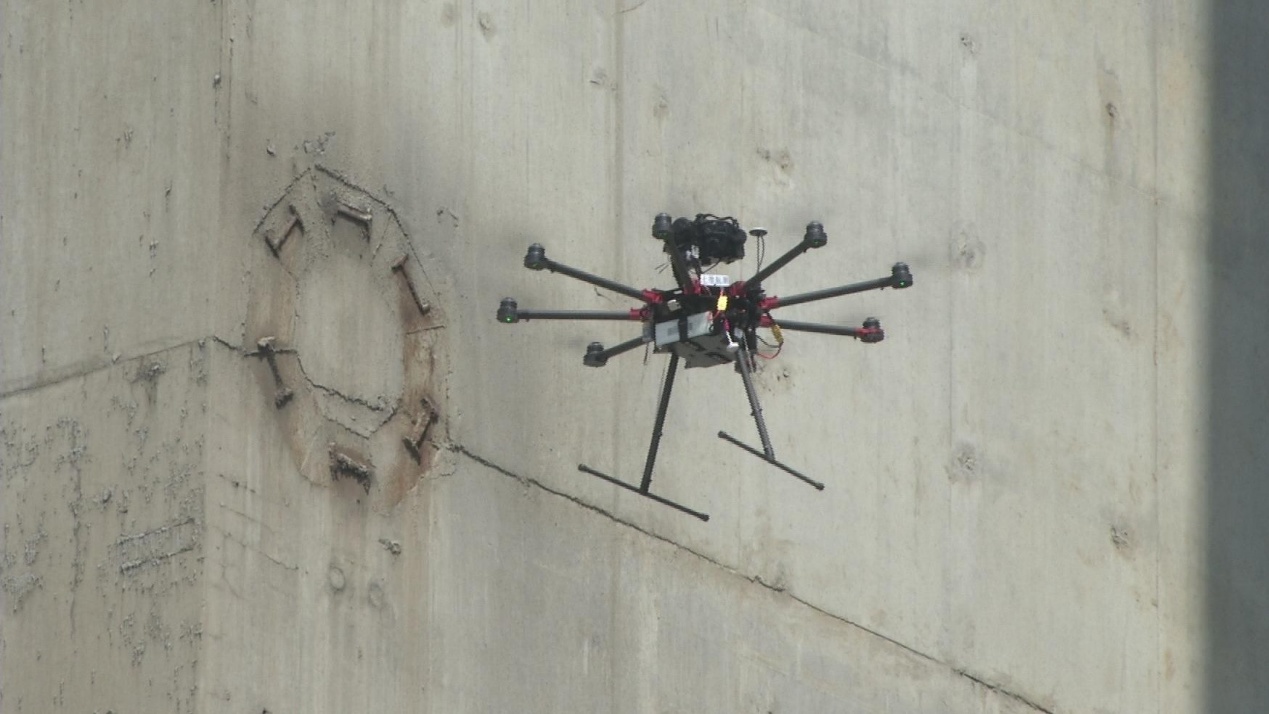
Bridge inspection drones must navigate complex steel structures and confined spaces while maintaining precise positioning. The Septentrio mosaic-X5 GNSS receiver addresses the unique challenges of operations around large metal infrastructure.
From suspension bridges to concrete overpasses, GNSS performance degrades near metal surfaces. Here is how the mosaic-X5 overcomes these obstacles and delivers reliable positioning for bridge inspection missions.
GNSS Challenges Near Steel Bridges
Steel bridges create three major problems for GNSS receivers. First, the metal structure blocks satellite signals overhead. Second, steel surfaces create strong multipath reflections that confuse position calculations. Third, electromagnetic interference from bridge monitoring equipment can degrade signal quality.
Most consumer-grade GNSS receivers fail in these conditions. The mosaic-X5 handles all three challenges through a combination of advanced signal processing and multi-constellation tracking.
AIM+ Multipath Rejection for Bridge Environments
The Septentrio AIM+ technology goes beyond basic anti-jamming. It includes advanced multipath rejection algorithms specifically designed for reflective environments like steel bridges.
AIM+ evaluates each satellite signal for distortion caused by reflection. It weights clean direct signals higher and suppresses reflected signals. This allows the receiver to maintain accurate positioning even when the drone flies directly beneath a steel bridge deck.
Visit our AIM+ resilient GNSS page for a deeper dive into this technology.
Dual-Antenna Heading for Tunnel Approaches
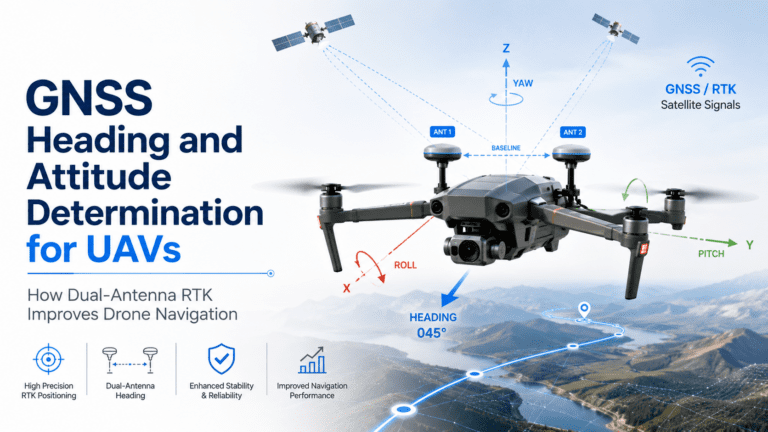
Bridge inspection often involves flying under the bridge deck and approaching from angles where standard heading solutions fail. The mosaic-X5 supports dual-antenna heading, providing true heading without relying on a magnetometer.
Magnetometers are unreliable near steel structures. A dual-antenna configuration uses two GNSS antennas to calculate heading from carrier-phase differences. This gives the drone a reliable heading reference even when flying through bridge underpasses or near steel reinforcement.
RTK and PPK Flexibility for Inspection Workflows
Bridge inspections require repeatable positioning. Inspectors need to return to the same bolt or weld year after year for comparison. The mosaic-X5 supports both RTK and PPK workflows to meet different inspection requirements.
For real-time navigation during the inspection flight, RTK provides centimeter-level guidance. For post-flight analysis and report generation, PPK processing delivers the final position and orientation data. The drone logs both streams simultaneously.
Multi-Frequency, Multi-Constellation Reliability
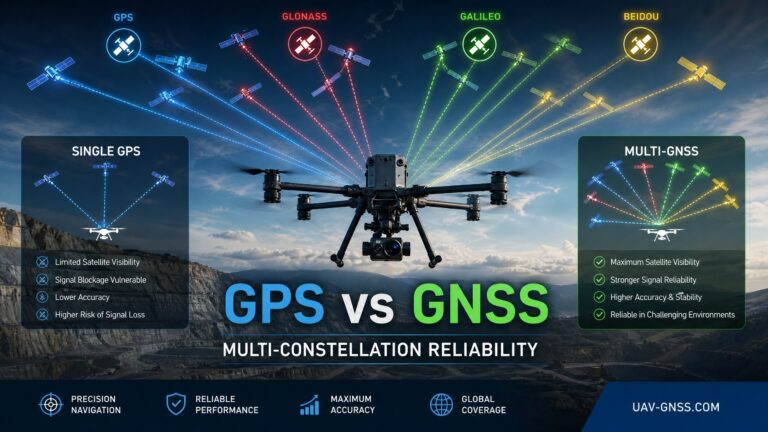
Under a bridge, a receiver might see only a narrow slice of the sky. The mosaic-X5 tracks all constellations and frequencies to maximize the usable satellite count in constrained visibility.
By tracking L1, L2, L5, E5a, E5b, and E6 bands across GPS, GLONASS, Galileo, BeiDou, and QZSS, the receiver makes the most of every visible satellite. This frequency diversity also helps distinguish genuine signals from multipath reflections.
Integration with Bridge Inspection Payloads
The mosaic-X5 outputs position data through standard interfaces compatible with autopilots like Pixhawk and Cube. It also provides event timing inputs for synchronized image capture, essential for photogrammetric bridge surveys.
When paired with high-resolution cameras or LiDAR for structural inspection, the receiver’s accurate timestamps enable direct georeferencing. Each image or point cloud is tagged with precise position and orientation data.
Cross-Link to Related Content
For more on bridge monitoring applications, read GNSS modules for bridge monitoring UAVs and resilient GNSS for inspection drones.
Our HB6 GNSS box receiver provides a ruggedized solution for field deployment. Browse the full product line at uav-gnss.com.
External Reference
The ISPRS Archives publish peer-reviewed research on UAV bridge inspection techniques. See also the MDPI Drones journal for recent studies on GNSS performance near steel infrastructure.