Power Line Inspection UAVs: Septentrio Mosaic-X5 GNSS Receiver for Accurate Infrastructure Surveys
Power line inspection UAVs with the Septentrio mosaic-X5 GNSS receiver: accurate RTK positioning for infrastructure surveys and corridor mapping.
Technical deep-dives into multi-constellation GNSS, RTK, heading, and receiver technology

Power line inspection UAVs with the Septentrio mosaic-X5 GNSS receiver: accurate RTK positioning for infrastructure surveys and corridor mapping.

Discover the Septentrio mosaic-G5 P3H heading receiver for advanced drone navigation: dual-antenna heading, RTK accuracy and AIM+ anti-jamming.

Multi-band GNSS for UAVs explained: why L1, L2 and L5 signals deliver survey-grade accuracy for professional drone mapping and inspection.
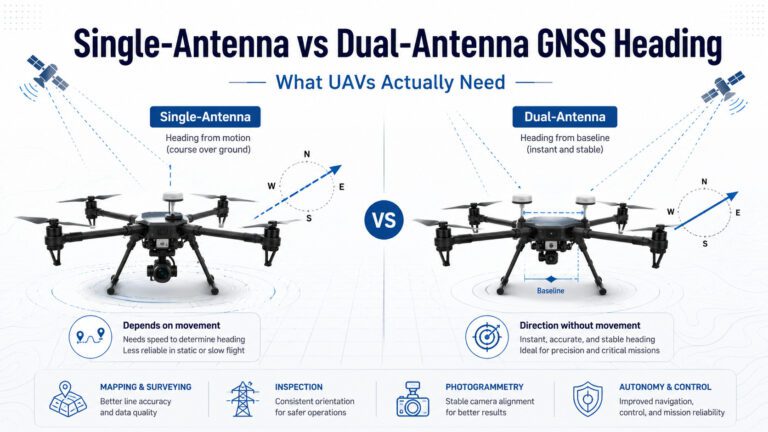
How GNSS receivers calculate heading: single-antenna Doppler vs dual-antenna carrier phase for UAVs.
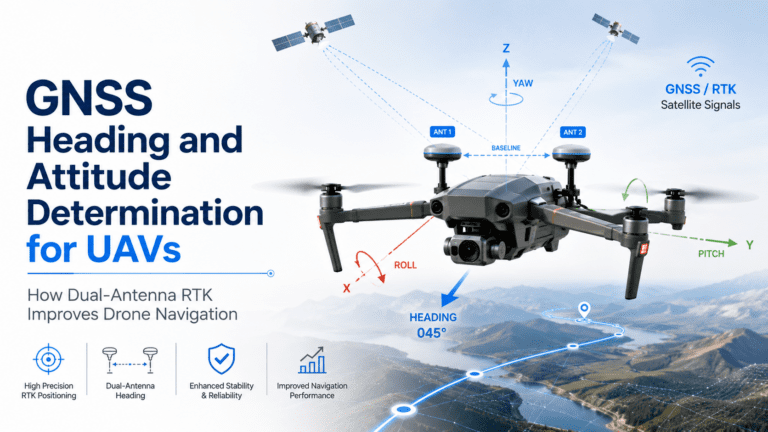
Standard GNSS receivers provide position — latitude, longitude, and altitude. But for autonomous UAV operations, knowing exactly where you are is…
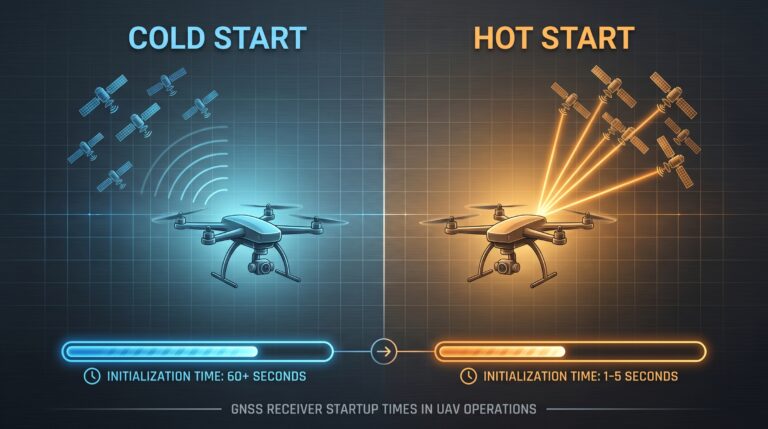
GNSS cold start vs hot start for UAV operations: how receiver initialization, signal reacquisition and RTK convergence affect flight readiness.

When designing a high-precision UAV, the choice of GNSS receiver module is one of the most critical decisions you’ll make. Septentrio’s…

MIL-STD-810H and AEC-Q104 GNSS reliability standards explained: how military-grade testing ensures receiver durability for UAV operations.

GNSS multipath mitigation explained: how Septentrio APME+ technology removes signal reflections for stable UAV positioning in urban canyons.

Septentrio mosaic-X5 vs mosaic-G5: GNSS Receiver Comparison for UAV Applications When choosing a high-precision GNSS receiver for a UAV platform, two…