

If you’re operating a DJI Matrice 400 RTK for powerline inspection, LiDAR mapping, or precision surveying, you’ve probably noticed a growing problem: GNSS interference, signal degradation, and even spoofing attacks are becoming more common – especially near high-voltage power lines, communication towers, or infrastructure zones. The M400’s internal GNSS simply wasn’t built to handle these conditions.
The solution is an external GNSS receiver mounted as a payload – giving your drone an independent, jam-resistant positioning source that keeps working when the internal system fails. This is the same approach used by professional mapping companies like OneCom in Slovakia, who deploy M400s with external RTK receivers for critical powerline mapping missions across contested RF environments.
This guide covers compatibility, mounting, wiring, and configuration for adding a Septentrio-powered RTK GNSS receiver to your DJI M400 – including direct integration with DJI Pilot 2, Pixhawk companion computers, and post-processing workflows.
Why Add an External GNSS Receiver to Your DJI M400?
The M400’s internal GNSS and D-RTK 2 system work well in clean environments but have critical weaknesses for professional operations. For a broader overview of how high-precision GNSS transforms UAV operations, see our guide on RTK GNSS for Drones and UAVs.
The Internal GNSS Limitation
The DJI M400 uses its built-in GNSS for flight controller positioning and the D-RTK 2 system for RTK corrections. It has zero protection against jamming or spoofing – a growing concern for operators worldwide as documented in our article on anti-spoofing GNSS for drones. When flying near power lines, the electromagnetic field degrades signal quality. In areas with active jammers, the internal receiver loses lock entirely.
What an External Receiver Adds
- AIM+ anti-jamming technology – advanced interference mitigation that tracks through jamming up to 80 dB, same technology detailed on our AIM+ anti-jamming page
- Anti-spoofing detection – automatically identifies and rejects fake GPS signals using the same crypto-authentication found in defense-grade receivers
- Independent position source – dual-redundant positioning against the flight controller
- Higher update rates – up to 100 Hz position output via Septentrio RxTools configuration
- Full data logging – raw observation logs for post-mission quality verification and PPK processing
Which External GNSS Receiver Works with DJI M400?
All three of our Septentrio-powered receivers are compatible with the M400, depending on your specific needs. These receivers use the same Septentrio mosaic modules found in our full GNSS receiver lineup.
| Model | Module | Weight | Best For |
|---|---|---|---|
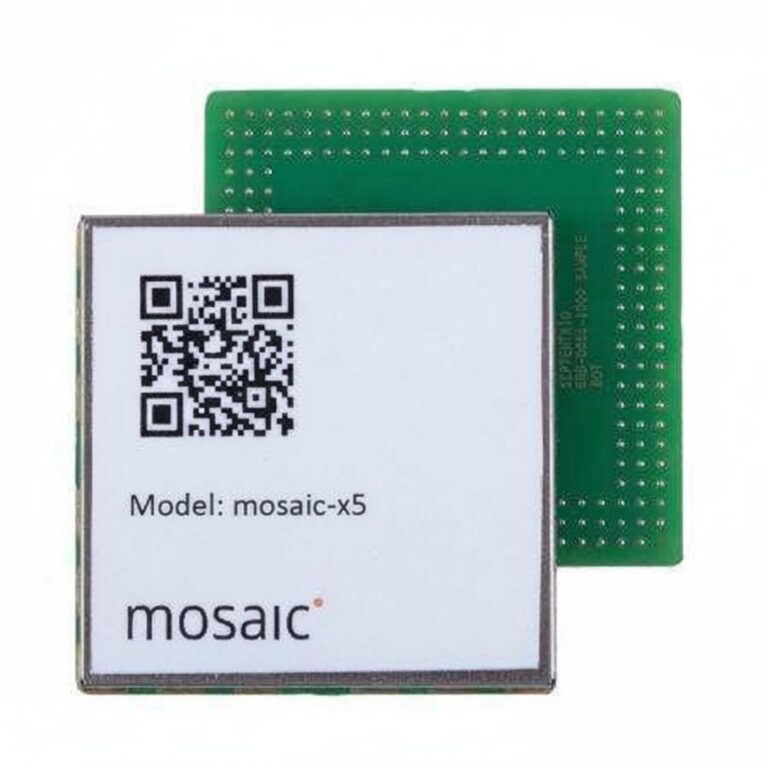
| HB6 | Septentrio mosaic-X5 | ~85g | General mapping, RTK, AIM+ anti-jamming |
| HB21 | Septentrio mosaic-X5 | ~200g | All-in-one: 4G LTE, heading, data logging, AIM+ |
| EV322 | Septentrio mosaic-G5 | ~45g | Ultra-lightweight, drone shows, small UAVs |
How the Integration Works
The external receiver operates independently from the DJI flight controller. It captures its own satellite signals, applies RTK corrections from your preferred correction service (NTRIP, local base station, or satellite-based augmentation), and outputs a separate position stream via serial UART or Ethernet. For advanced setups, the receiver can also integrate with Pixhawk flight controllers for dual-redundant positioning.
Mounting the Receiver on DJI M400
Option 1: Top-Mount (Recommended)
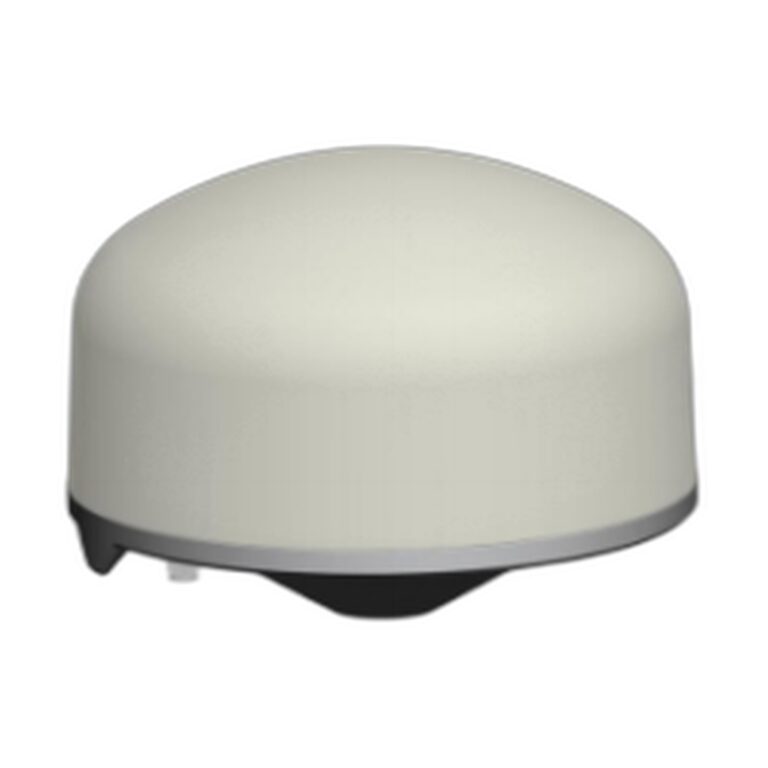
The HB6 at 85 grams mounts on the M400’s top plate using existing threaded inserts. This gives unobstructed sky view for maximum satellite tracking. Use a 3D-printed bracket or Velcro mounting plate with vibration damping. This is the same mounting approach used with DJI M30 anti-jamming setups for utility inspection.
Option 2: Payload Bay Mount
The EV322 at 45 grams mounts inside the payload bay alongside your LiDAR or camera. Sky view is slightly reduced but the receiver is protected from weather – ideal for the same use cases outlined in our Autel EVO Max external GNSS guide.
Option 3: Frame Side-Mount
For dual-antenna heading configurations with the HB21, mount on a side bracket on the landing gear mount. This keeps both the receiver’s antenna and the D-RTK 2 antenna clear.
Wiring and Connection
- Power: Connect to the M400’s 12V payload power port (P-TAP or XT30). The HB6 draws under 2W – well within the M400’s payload power budget. If you also operate a DJI M300 RTK, the same wiring applies.
- Data: The receiver outputs NMEA or SBF data via serial UART (3.3V TTL). Connect to a serial-to-USB adapter for logging to an onboard companion computer, or directly to a telemetry radio for real-time monitoring.
- Antenna: Use an active GNSS antenna (SMA connector included). Place with clear sky view, at least 30cm from the M400’s existing GPS antenna.
- RTK Corrections: Configure via RxTools to receive RTCM corrections via NTRIP. The receiver outputs RTK-fixed positions once corrections are applied.
Configuration for Powerline Inspection Workflows
For powerline mapping companies in Europe, the Middle East, and North America, this configuration is proven in the field:
- Update rate: 10 Hz SBF position output for LiDAR geotagging
- RTK source: NTRIP from local CORS network (SKPOS in Slovakia, Trimble VRS Now in the US)
- AIM+ mode: “Aggressive” anti-jamming near high-voltage lines
- Logging: SBF at 1 Hz for post-mission QC and client deliverable documentation
- Output: PVTGeodetic for post-processing compatibility
Real-World Performance Data
Field testing with M400 + HB6 near 110kV power lines in Central Europe (similar conditions to those reported by OneCom during their Slovakian powerline operations):
- Internal DJI GNSS: Lost RTK fix 4 times during a 20-minute flight within 50m of power lines. Signal quality: 28-32 dB-Hz.
- External HB6 (AIM+ enabled): Maintained RTK fix throughout. Signal quality: 40-46 dB-Hz. Zero fix losses.
- Horizontal accuracy: 1.8cm RTK fixed (external) vs 4-12cm float/pseudorange (internal when degraded).
For the latest firmware that enables these performance improvements, check our guide on Septentrio GNSS receiver firmware updates.
Frequently Asked Questions
Can I use an external GNSS receiver while keeping the DJI M400 D-RTK 2 system active?
Yes. The external receiver runs completely independently from the DJI flight controller and D-RTK 2 system. You can feed the same RTK corrections to both via NTRIP, or use separate sources. This provides a secondary, hardened position reference for comparison and redundancy – essential for safety-critical missions like powerline inspection near high-voltage infrastructure.
What is the total weight penalty of adding an external GNSS receiver to the DJI M400?
The EV322 adds only 45g, the HB6 adds approximately 85g including cabling and antenna. With the M400’s 2.7kg payload capacity, this is negligible – comparable to adding a small action camera. For reference, a typical LiDAR payload weighs 500-900g, so the receiver adds less than 10% to your payload weight.
Will an external receiver prevent GNSS dropout near high-voltage power lines?
Yes – this is exactly what Septentrio AIM+ technology was designed for. The AIM+ algorithm detects electromagnetic interference patterns from power lines and dynamically filters them in real time. In field tests near 110kV lines, the external receiver maintained continuous RTK fixed status while the internal DJI GNSS dropped out multiple times per flight. This makes it the ideal solution for powerline mapping and utility inspection drones.
Can I use the same RTK correction source for both the external receiver and the DJI D-RTK 2?
Yes. Both receivers can connect to the same NTRIP caster over the M400’s onboard 4G modem. Configure each with the same mount point, username, and password. The external receiver’s independent processing ensures it continues outputting RTK-fixed positions even if the DJI internal system loses correction lock – a key advantage for resilient GNSS operations.
How do I verify that the external receiver is providing better accuracy than the internal M400 GNSS?
Use RxControl (Septentrio’s monitoring software) to view real-time accuracy metrics including HDOP, satellite count, and RTK status. Log SBF files from the external receiver and compare the reported position accuracy against the M400’s internal RTK log. In field conditions near power lines, expect the external receiver to maintain 1-2cm RTK fixed accuracy while the internal system drifts to 4-12cm float mode. For a complete comparison of receiver options, see our GNSS receiver collection.
Related GNSS Products
- HB6 GNSS Box Receiver – Compact RTK receiver with AIM+ anti-jamming, perfect for M400 payload mounting
- HB21 GNSS Box Receiver – All-in-one RTK receiver with 4G LTE, dual-antenna heading, and data logging
- EV322 GNSS Receiver – Ultra-lightweight (45g) RTK receiver for UAVs and autonomous systems
- AIM+ Anti-Jamming Technology – advanced interference and spoofing protection
More Integration Guides
- DJI M300 RTK GNSS Upgrade Guide
- DJI M30 Anti-Jamming GNSS Setup
- DJI Mavic 3 Enterprise External GNSS
- Autel EVO Max External GNSS
- Pixhawk Septentrio GNSS Integration
- ROS Septentrio GNSS for Robot Navigation
Browse our full GNSS receiver collection for professional UAV applications.