
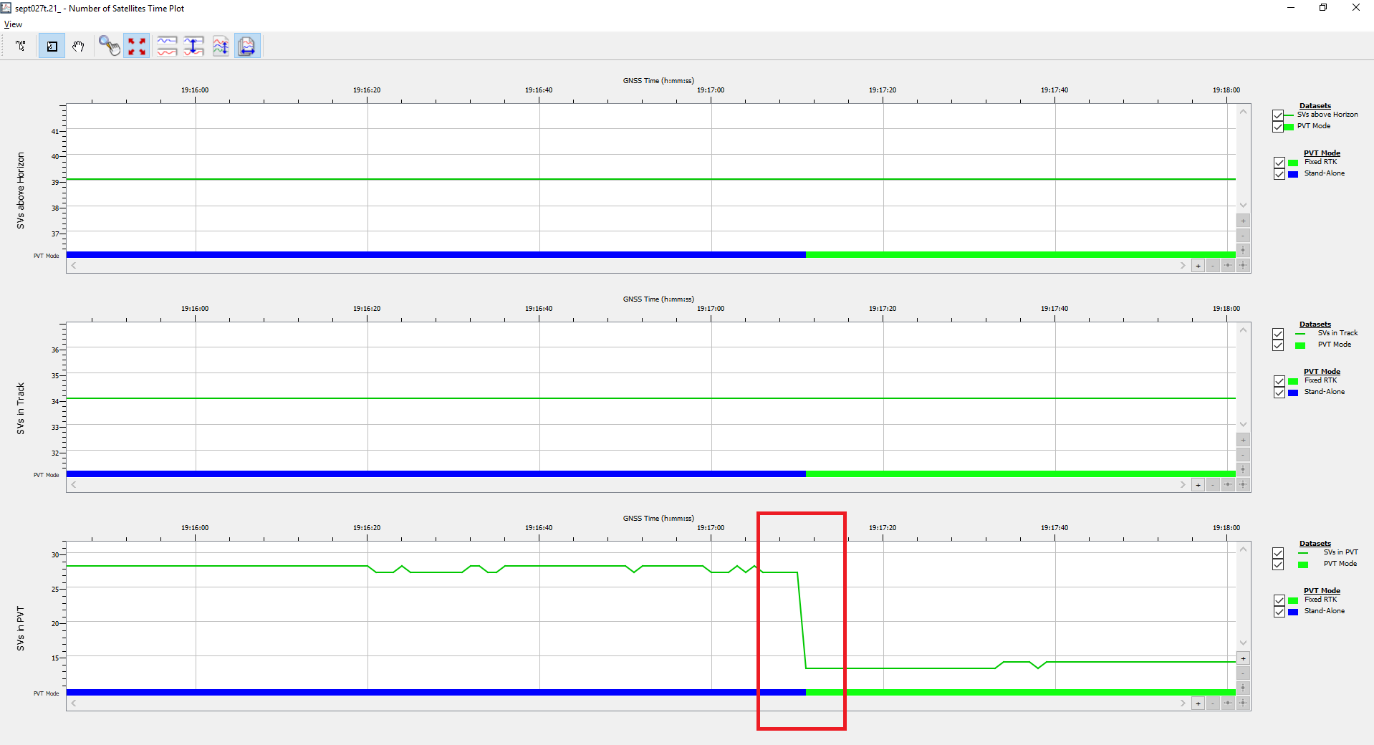
A sudden drop in GNSS satellite count can look alarming – especially if you are relying on RTK positioning for centimeter-level accuracy. In the example shown in SBF Analyzer, the number of satellites used in the positioning solution drops from 27 to 13. At first glance, this may look like a receiver fault or a software problem.
However, the data in this example shows something very different.
At approximately 19:17:10, the PVT Mode status changes from blue to green, indicating that the receiver has entered RTK Fixed. At the same time, the number of satellites participating in the PVT solution decreases from 27 to 13, while the positioning accuracy improves from approximately 2 meters to 2 centimeters.
This example shows why GNSS performance should not be judged only by the number of satellites displayed by the receiver. Understanding the difference between satellite visibility, tracking, and usage is the key to reading SBF Analyzer correctly.
Understanding Satellite Count in SBF Analyzer
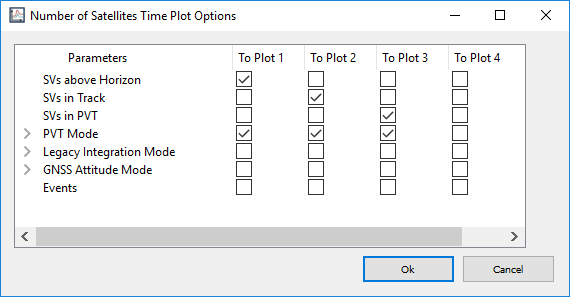
SBF Analyzer does not display just one satellite-count value. The original material identifies three separate indicators:
- Above Horizon – represents the satellites that are theoretically visible above the horizon.
- In Track – represents the satellites that the receiver is actually tracking.
- In PVT – represents the satellites that are actually being used in the position solution.
These values are not expected to be identical because they describe different stages of the GNSS processing chain.
For example, a satellite may be geometrically visible above the horizon but may not currently be tracked by the receiver. Similarly, a tracked satellite does not necessarily have to be included in the final PVT solution.
This distinction is especially important when analyzing RTK positioning.
What Happens When RTK Fixed Is Reached?
The key event in the original SBF Analyzer example occurs at approximately 19:17:10.
At this point, the PVT Mode status changes from blue to green, indicating RTK Fixed. The PVT satellite count then changes from 27 satellites to 13 satellites.
The important point is that positioning accuracy does not become worse.
Instead, the accuracy improves dramatically – from approximately 2 meters to 2 centimeters.
Why Can RTK Fixed Use Fewer Satellites?
According to the original document, the RTK base station in this example provides differential corrections for only part of the available constellations.
The receiver therefore actively uses the satellites from the corrected constellations when calculating the RTK solution. The original script describes this behavior as an “intelligent selection” process.
This is why the PVT satellite count can decrease after RTK Fixed is achieved. The decrease does not automatically mean that satellites have disappeared from the sky or that the receiver has stopped tracking them. Instead, it means that fewer satellites are participating in the final corrected position solution.
The quality of the final position is therefore more important than the raw satellite count. A receiver using 13 well-corrected satellites can deliver far better positioning than one using 27 satellites without differential corrections.
27 Satellites vs 13 Satellites: What Does the Example Show?
The comparison in the original material is simple:
- Before RTK Fixed: PVT satellite count = 27; positioning accuracy ≈ 2 m.
- After RTK Fixed: PVT satellite count = 13; positioning accuracy ≈ 2 cm.
The satellite count decreases, but the positioning accuracy improves significantly.
This is why GNSS users should avoid assuming that “more satellites always means better positioning.” Satellite quantity and positioning quality are related, but they are not the same measurement. In RTK applications, the correction source and the solution status (Fixed vs Float) matter more than the headline satellite number.
When Should a Falling Satellite Count Be Investigated?
1. In Track Is Much Lower Than Above Horizon
If the number of satellites in In Track becomes significantly lower than Above Horizon, the original document recommends checking the antenna.
Possible causes include the antenna being obstructed or installed incorrectly / at the wrong angle.
A large and persistent difference between theoretically visible satellites and actually tracked satellites may therefore indicate an antenna visibility or installation problem. Antenna placement is one of the most common causes of degraded GNSS performance in the field.
2. In PVT Remains Below 10 for a Long Time
The second condition occurs when the number of satellites in In PVT remains below 10 for an extended period.
According to the original script, one possible explanation is that only one GNSS constellation has been enabled. This condition should therefore trigger a review of the receiver configuration and the available satellite solution – for example, checking that all expected constellations are enabled and that no interference is present.
Outside these specific abnormal conditions, the original document states that fluctuations in satellite count are often normal.
What Should You Check Instead of Satellite Count Alone?
When evaluating GNSS performance, satellite count should be considered together with the solution status and positioning accuracy.
In the example presented here, the most important indicators are whether the receiver has reached RTK Fixed, the number of satellites actually participating in PVT, the final positioning accuracy, and the relationship between Above Horizon, In Track, and In PVT.
A drop in satellite count should therefore be interpreted in context rather than treated as an automatic sign of failure.
Why SBF Analyzer Is Useful for GNSS Troubleshooting
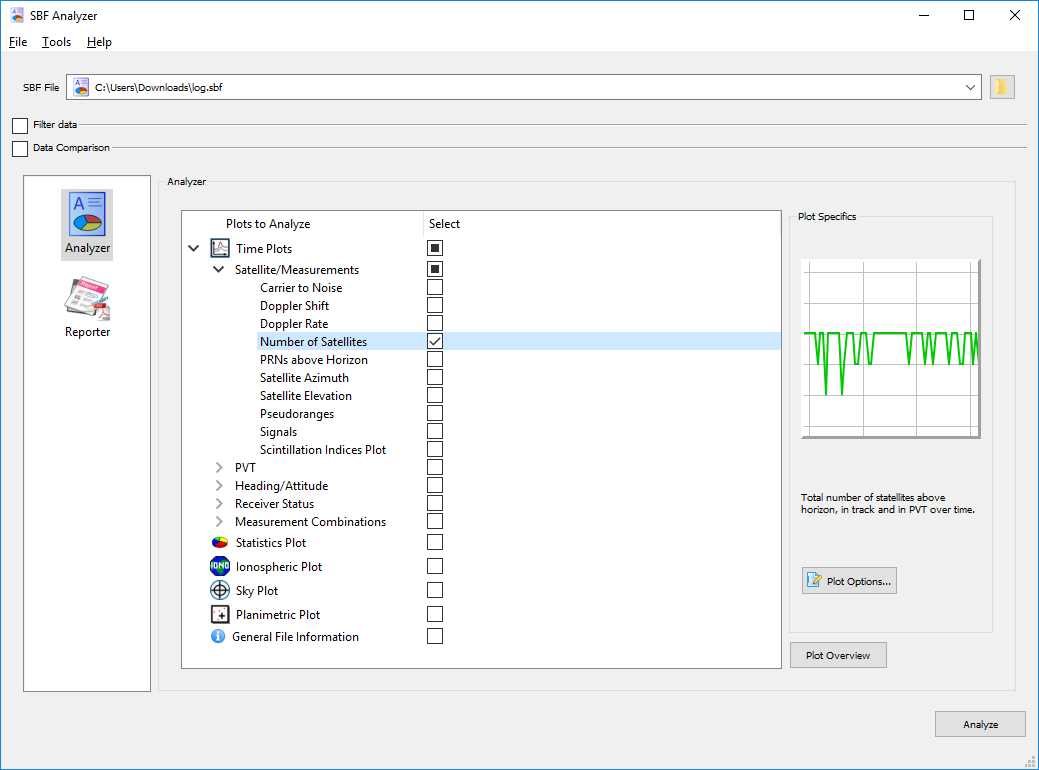
The original workflow uses SBF Analyzer to examine the Number of Satellites plots and compare the three satellite-count indicators.
The first screenshot in the source document shows the Number of Satellites option inside SBF Analyzer, the second shows the plot configuration for the related satellite datasets, and the third shows the actual RTK transition and satellite-count change over time.
By viewing satellite tracking and PVT information over time, users can distinguish normal RTK behavior from conditions that may require further troubleshooting.
Frequently Asked Questions
Is it normal for the satellite count to drop after RTK Fixed?
Yes. When the receiver enters RTK Fixed, it may switch to using only the constellations covered by the base station corrections – in this example, dropping from 27 to 13 satellites while accuracy improves from approximately 2 m to 2 cm.
What is the difference between Above Horizon, In Track, and In PVT?
Above Horizon counts the satellites theoretically visible above the horizon, In Track counts the satellites the receiver is actually tracking, and In PVT counts the satellites used in the final position solution. They describe different stages of the GNSS processing chain and are not expected to be identical.
Why does my receiver show fewer satellites after RTK is enabled?
RTK correction streams often cover only part of the available constellations. The receiver applies “intelligent selection” and uses the satellites with differential corrections for the RTK solution, which can reduce the PVT satellite count even though tracking continues.
When should a low satellite count be investigated?
When In Track is much lower than Above Horizon (check the antenna for obstruction or an incorrect installation angle) or when In PVT stays below 10 for a long time (check that more than one constellation is enabled). Outside these cases, fluctuations are usually normal.
Key Takeaway
A drop from 27 satellites to 13 satellites does not automatically mean that the GNSS receiver has a problem.
In the original SBF Analyzer example, the decrease occurs when the system reaches RTK Fixed, and the positioning accuracy improves from approximately 2 m to 2 cm.
Do not evaluate GNSS performance using satellite count alone. Look at the RTK solution status, PVT satellite usage, and final positioning accuracy together.
If you are seeing unexpected satellite counts on your own receiver and want help interpreting the data, contact our team. We can help you verify that your GNSS receiver is configured correctly for your application.