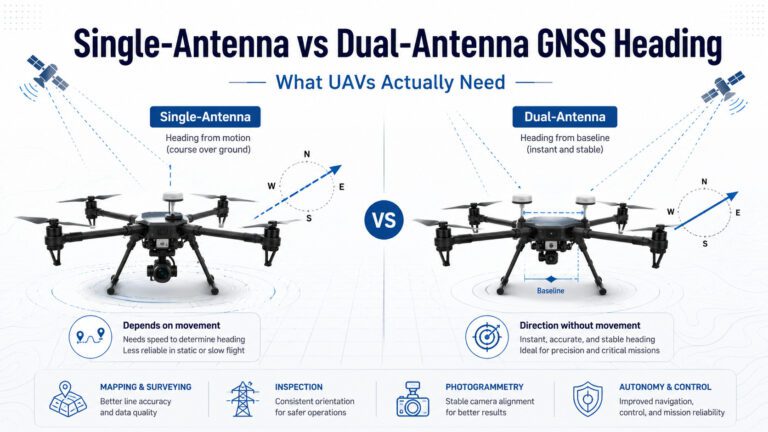

Single-Antenna vs Dual-Antenna GNSS Heading: What UAVs Actually Need
How GNSS receivers calculate heading: single-antenna Doppler vs dual-antenna carrier phase for UAVs.

How GNSS receivers calculate heading: single-antenna Doppler vs dual-antenna carrier phase for UAVs.

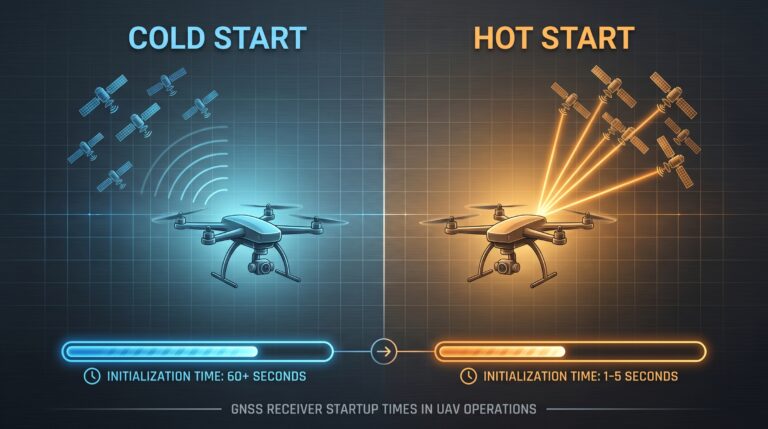
Understanding GNSS receiver startup times: cold, warm, and hot start differences and impact on drone deployment.

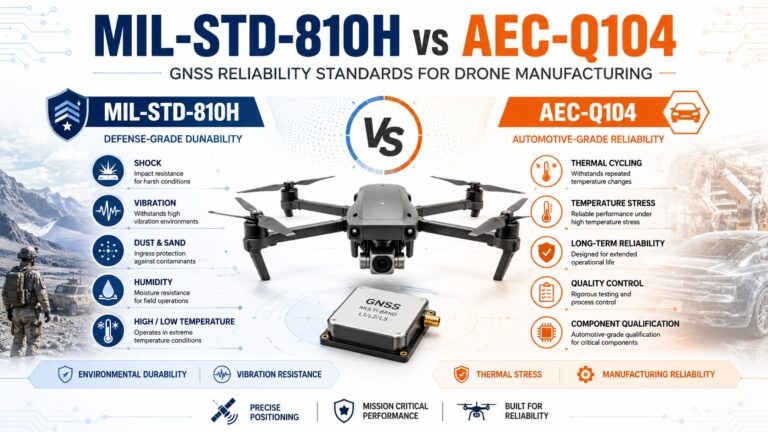
Understanding MIL-STD-810H and AEC-Q104 certification for GNSS modules in professional drone platforms.

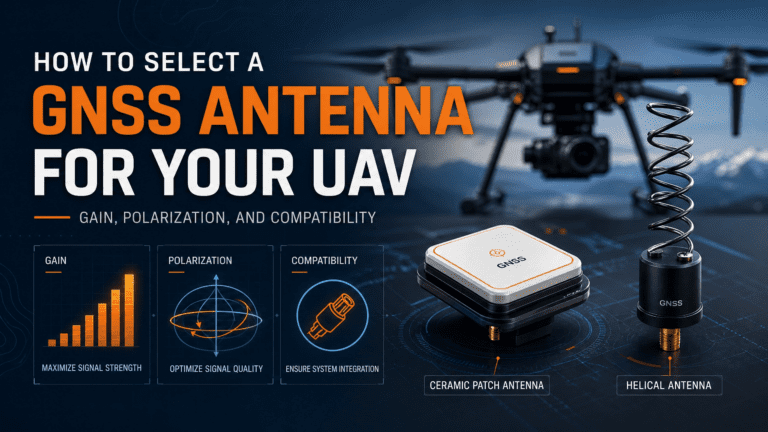
Guide to selecting the best GNSS antenna for UAV integration. Learn about gain, polarization, RHCP, form factor, and Septentrio receiver compatibility for professional RTK drone applications.

Septentrio vs u-blox F9P: Head-to-Head GNSS Receiver Comparison When selecting a GNSS receiver for a professional drone platform, two names dominate…

Integrating a high-precision GNSS receiver into a UAV flight controller is one of the most impactful upgrades a drone manufacturer or…

Learn how Septentrio AIM+ anti-jamming GNSS technology protects drones operating in cities from signal interference and spoofing attacks.

Compare Septentrio Mosaic-X5 and Mosaic-G5 P3H GNSS modules for UAVs. Understand when to choose single-antenna RTK vs dual-antenna heading for your drone.

Learn why dual-antenna GNSS heading receivers outperform magnetometers for UAV navigation. Understand heading accuracy, real-world applications, and integration tips.

Single-Frequency vs Multi-Frequency GNSS Receivers for UAVs – a practical comparison for drone manufacturers choosing the right GNSS technology.

Typically replies within a day