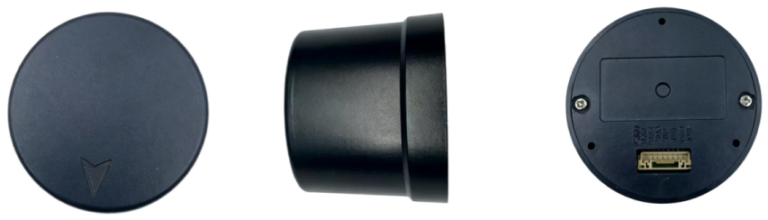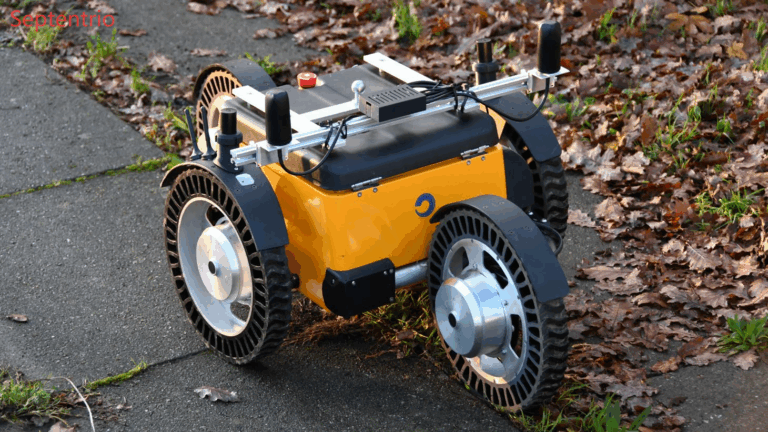

Image source: Septentrio — official DroneX 2026 event banner.
Septentrio is exhibiting at DroneX 2026 — part of the Uncrewed Tech Expo — on 29–30 September 2026 in the United Kingdom. The booth is built around one idea that matters more than any single datasheet line for small airframes: high-end positioning performance without weighing the platform down.
On show is the mosaic-G5 P6, a compact, multi-frequency GNSS module aimed squarely at lightweight drones, robotics and autonomous systems. If you fly small airframes — or fly hundreds of them at once in a drone light show — this is the conversation worth having. Here is what is on display, and how it connects to the receivers we supply.
What Septentrio Is Showing at DroneX 2026
| Event | DroneX — part of the Uncrewed Tech Expo |
| Dates | 29–30 September 2026 |
| Location | United Kingdom |
| Exhibitor | Septentrio (septentrio.com) |
| Product highlight | mosaic-G5 P6 — high-performance, multi-frequency GNSS |
| Positioning theme | Resilient GNSS for UAVs, robotics and autonomous systems |
| Recurring topics | Interference mitigation, RTK and heading, low size / weight / power |
Why “Flying Light” Is Really a GNSS Problem
“Make every gram — and every position — count” is a neat slogan, but for UAV integrators it describes two engineering constraints that pull in the same direction. The first is weight. Every extra gram of receiver, antenna and cabling is a gram subtracted from payload, endurance or the number of airframes a fleet can fly. The second is trust in the position itself. A centimeter-class solution is only worth carrying if it still holds when the RF environment gets crowded.
Drone light shows compress both constraints into a single problem. A show is a positioning exercise dressed as an art project: hundreds of airframes — sometimes more — each holding a planned coordinate in a formation that is constantly moving, with GNSS as the only absolute reference available. There is no runway, no ground control point and no second attempt mid-display. A receiver that drifts, drops its RTK fix or loses heading under interference does not produce a slightly imperfect picture; it produces a visible one.
That is why lightweight airframes end up asking for the same things as industrial machine control: multi-frequency and multi-constellation tracking, interference mitigation that works before the fix is lost, and predictable update rate and latency rather than a best-case number. Our guide to GNSS for drone shows and eVTOL covers the formation-navigation side in depth, and this lighting-drone application note walks through the receiver-level requirements.
The Septentrio Engines Inside Our HB6, HB51 and HBEV322 Receivers
We build UAV GNSS hardware on the same Septentrio silicon that is on the DroneX booth, so what Septentrio announces is usually one firmware release away from being relevant to our customers.
- HB6 and HB6 Pro — boxed receivers built on the mosaic-X5 engine, for UAV and autopilot integration where a rugged enclosure is easier than a bare module.
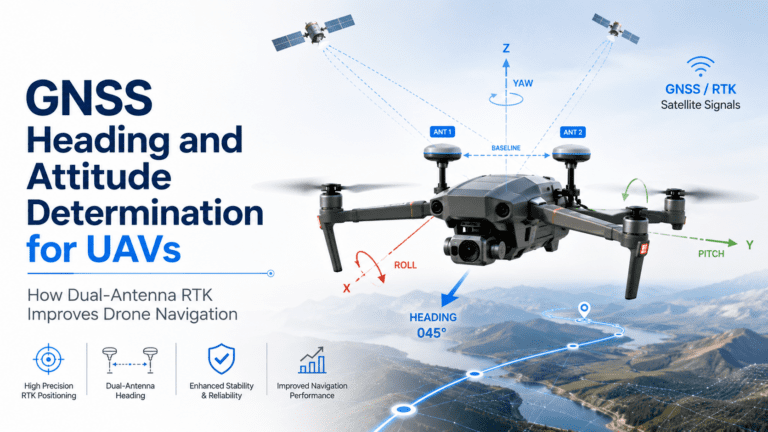
- HB51 — RTK positioning and heading module on mosaic-G5 P3H, for airframes that need attitude as well as position from a dual-antenna setup.
- HBEV322 / HBEV322H — compact RTK GNSS receiver on mosaic-G5 P3, aimed at space-constrained integrations.
- HB52 / HB52H — ultralight RTK GNSS module on the mosaic-G5 family, for weight-critical airframes where the “flying light” argument is literal.
All four line up with the same multi-constellation, multi-frequency approach Septentrio is presenting at DroneX — Septentrio Inside, in the form factor each airframe can actually carry.
Questions Worth Asking at the Booth
If you are at the show, these are the questions that turn a booth conversation into an integration decision:
- Which mosaic-G5 P6 configuration suits your airframe’s mass, power and pin-out budget?
- How does AIM+ interference mitigation behave in a crowded event RF environment — before or after the RTK fix degrades?
- Is heading handled by dual antenna, moving base, or GNSS fused with an IMU?
- What update rate and latency can you rely on for formation control, not just in the datasheet best case?
- How much current does the receiver draw, and what does that cost in flight time?
If you are working on swarm or formation flight specifically, our write-up on drone swarm navigation covers how multi-UAV collaborative positioning is actually wired.
DroneX 2026 FAQ
Where and when is DroneX 2026?
DroneX 2026 runs 29–30 September 2026 in the United Kingdom, as part of the Uncrewed Tech Expo. Septentrio is exhibiting at the show.
What is Septentrio showing at DroneX 2026?
The mosaic-G5 P6, a compact, low-power multi-frequency GNSS module for resilient positioning on lightweight drones, robotics and autonomous systems — with a focus on anti-jamming performance and high-end positioning without adding mass.
Which UAV GNSS receivers use Septentrio mosaic-G5 and mosaic-X5 engines?
Our HB6 and HB6 Pro use the mosaic-X5 engine, while HB51 (mosaic-G5 P3H), HBEV322 / HBEV322H (mosaic-G5 P3) and the ultralight HB52 / HB52H modules run on the mosaic-G5 family.
Not going to DroneX? We can answer the same integration questions about putting a Septentrio-powered receiver into your airframe — mass, power, heading and interference resilience included.
Request a quote · Talk to our GNSS specialists · Anti-jamming & interference resilience