PPP-RTK for Drones: Base-Station-Free Centimeter Positioning Explained
PPP-RTK convergence: how satellite-delivered corrections eliminate local base stations for drone operations.
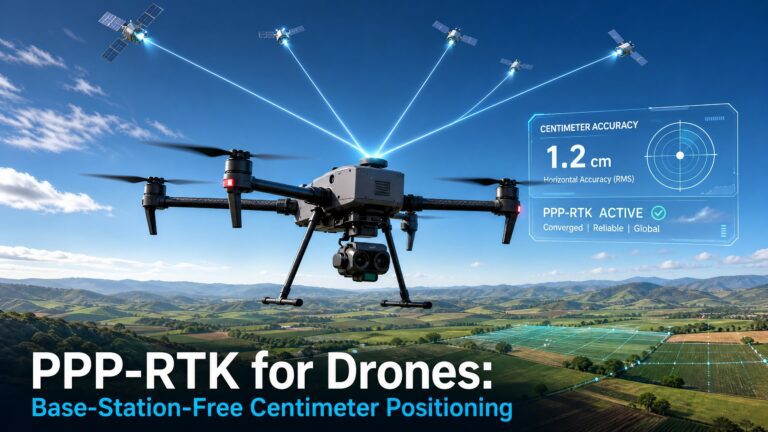
PPP-RTK convergence: how satellite-delivered corrections eliminate local base stations for drone operations.
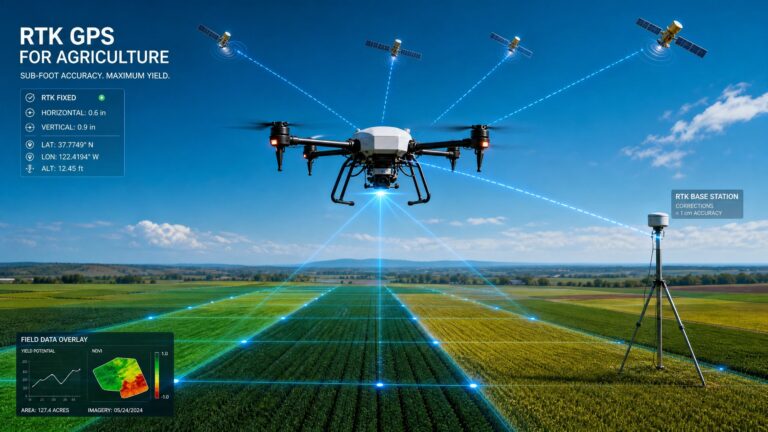
Precision agriculture has moved from a niche specialty to a core practice for modern farming operations. At the heart of this transformation is RTK…

The mosaic-G5 P3 GNSS receiver features a compact size and low power consumption. It supports all-frequency, multi-system signal tracking and raw data output, and is equipped with anti-interference and multipath suppression capabilities, delivering stable centimeter-level RTK positioning performance. It is suitable for drone aerial surveying, enhancing the quality of mapping data and operational reliability, and adapts well to various complex environments and high-dynamic scenarios.

The Septentrio mosaic-X5 high-precision GNSS receiver delivers core navigation power for your ArduPilot open-source flight control system. With full-system, full-band support, anti-interference capability, and centimeter-level RTK positioning, its 100 Hz high-frequency output enables precise control at high speeds. Seamlessly integrated with hardware such as Pixhawk, it is the ideal positioning solution for professional applications including agricultural mapping and power line inspection.

Facing the challenges of signal interference and denial in complex environments, Septentrio offers a “powerful core” solution. Its mosaic-G5 series modules integrate AIM+ advanced anti-jamming and anti-spoofing technology, ensuring stable and trusted high-precision positioning and timing signals even under strong electromagnetic interference. By strengthening the robustness of swarm navigation from the individual source, it lays a solid foundation for precise and reliable collaborative operations of multiple drones.

Equip your cinematography drone with the Septentrio Mosaic-G5 P3H GNSS receiver. Dual-antenna heading, centimeter-level RTK, and AIM+ anti-jamming for repeatable, professional aerial film shots.

The Septentrio AsteRx-m3 Pro+ and mosaic-X5 high-precision GNSS receivers provide centimeter-level RTK positioning and robust anti-jamming capabilities for the PX4 open-source flight controller. With two models tailored to meet diverse needs—from prototyping to professional surveying—they enable seamless integration, supporting industrial UAVs in achieving stable, reliable high-dynamic flight and precision operations.

Discover the Septentrio mosaic-X5 GNSS receiver for power line inspection UAVs. AIM+ anti-interference for reliable positioning near high-voltage lines.

High-Precision GNSS Technology Empowers Modern Emergency Search and Rescue High-precision positioning and anti-jamming technology are critical for search and rescue (SAR)…

UAVs Professional-Grade Navigation and Control Fusion Solution for the UAV Industry In today’s rapidly developing UAV industry, GNSS navigation systems are…