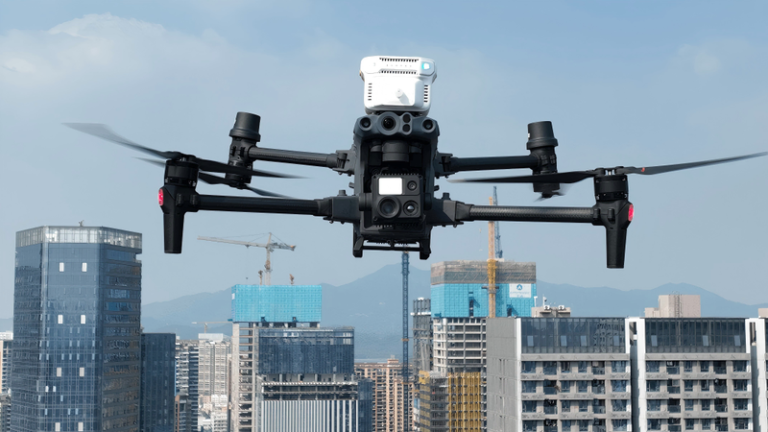

This GNSS receiver buying guide for drone manufacturers for drone manufacturers covers everything you need to know about selecting the right positioning technology in 2026. With over 1,500 drone manufacturers worldwide and new players entering the market every month, choosing the right GNSS receiver has become a critical decision for UAV OEMs. Your choice of positioning technology directly impacts drone performance, reliability, and market competitiveness.
Why GNSS Matters More Than Ever for Drones
Modern drones rely on centimeter-level positioning for everything from autonomous navigation to precise payload delivery. The GNSS receiver is the heart of a drone positioning system, and choosing the right one determines whether your UAV meets its performance specifications. This GNSS receiver buying guide for drone manufacturers addresses the unique challenges drone manufacturers face in 2026. With increasing demand for autonomous operations, BVLOS flights, and precision applications, the GNSS receiver has become the single most important component affecting drone reliability and accuracy.
Whether you are building agricultural sprayers, surveying UAVs, or mission-critical platforms, the right GNSS receiver directly impacts your product positioning accuracy, anti-jamming resilience, and overall market competitiveness.
Key Factors to Consider
When using this GNSS receiver buying guide for drone manufacturers, drone manufacturers should evaluate these critical factors that directly impact UAV performance:
Accuracy Requirements: Surveying and mapping drones need centimeter-level RTK accuracy, while basic inspection drones may only require sub-meter accuracy. Multi-frequency receivers like the Septentrio mosaic-X5 deliver the highest precision.
Environmental Resilience: Drones operating near power lines, urban canyons, or contested areas need advanced anti-jamming and anti-spoofing protection. Septentrio AIM+ technology provides industry-leading resilience.
Size, Weight, and Power (SWaP): Smaller drones need compact GNSS modules. The mosaic-G5 series offers ultra-compact form factors ideal for space-constrained UAV designs.
Cost vs. Performance: The ZED-F9P offers excellent value for commercial applications, while Septentrio modules justify their premium with superior resilience and long-term reliability.
For official documentation on PX4 and ArduPilot GNSS support, visit PX4 Septentrio driver guide and ArduPilot Septentrio integration guide.
Compatibility: Ensure your chosen GNSS receiver works with your flight controller. PX4 and ArduPilot ecosystems have native support for both u-blox and Septentrio receivers.
GNSS receiver buying guide for drone manufacturers: Recommended GNSS Receivers for Drone Manufacturers
Based on our analysis, three GNSS receiver families dominate the drone industry in 2026. This GNSS receiver buying guide for drone manufacturers recommends the following options based on application requirements:
Septentrio mosaic-X5 / mosaic-G5
Best for: High-end surveying, mapping, and mission-critical drones. Offers AIM+ anti-jamming and anti-spoofing protection, centimeter-level RTK accuracy, and multi-constellation support. Used by Wingtra, AgEagle, and Holybro.
u-blox ZED-F9P
Best for: Commercial inspection, agriculture, and logistics drones. Cost-effective with excellent RTK performance. The most widely adopted GNSS receiver in the drone industry, used by over 65% of commercial drone manufacturers.
Unicore UM980 / UM982
Best for: Chinese manufacturers and BeiDou-optimized applications. Offers competitive performance with strong BeiDou and Galileo support at lower price points than Western alternatives.
GNSS Receiver Applications by Drone Type
Every drone type has unique GNSS requirements. This GNSS receiver buying guide for drone manufacturers breaks down the best receiver choices by application:
Surveying and Mapping Drones: Require the highest accuracy — Septentrio mosaic-X5 or mosaic-G5 with RTK/PPK support. Used by companies like Wingtra and AgEagle for centimeter-level mapping.
Agricultural Spraying Drones: Need reliable RTK positioning for precise chemical application. The u-blox ZED-F9P is the most common choice, while Septentrio mosaic-G5 offers superior reliability in challenging field conditions.
Delivery and Logistics Drones: Require robust positioning with anti-jamming capabilities for urban operations. Septentrio mosaic-X5 provides the resilience needed for autonomous delivery fleets.
critical infrastructure and security Drones: Demand the highest level of anti-spoofing and anti-jamming protection. Septentrio AIM+ technology is the gold standard for contested environments.
Inspection Drones: Need consistent accuracy near structures. Multi-frequency receivers like the mosaic-G5 P3 provide reliable positioning even near power lines and buildings.
This GNSS receiver buying guide for drone manufacturers 2026 helps match your specific drone application with the optimal GNSS technology.
Integration: GNSS receiver buying guide for drone manufacturers
When integrating a GNSS receiver into your drone design, several factors determine success. This GNSS receiver buying guide for drone manufacturers highlights the key integration considerations:
- Antenna placement: Keep clear of carbon fiber, motors, and batteries for optimal signal reception
- Power supply: Clean power with minimal ripple — critical for RTK accuracy
- Protocol support: NMEA, RTCM, and raw measurement data output compatibility with your flight controller
- Firmware updates: OTA or USB update capability for future feature enhancements
- Thermal management: Receivers generate heat in continuous operation; ensure adequate cooling
- EMI shielding: Protect GNSS receiver from electromagnetic interference from motors and ESCs
The GNSS receiver buying guide for drone manufacturers 2026 emphasizes that proper integration is as important as receiver selection itself.
Conclusion
This GNSS receiver buying guide for drone manufacturers has covered the key considerations for selecting the right positioning technology for your drone products. The GNSS receiver buying guide for drone manufacturers 2026 recommendations are based on real-world analysis of 2,008 manufacturers, ensuring you get practical, data-driven advice.
For drone manufacturers looking to differentiate their products, the GNSS receiver is a strategic choice. Whether you select Septentrio for premium resilience, u-blox for cost-effective performance, or Unicore for BeiDou-optimized designs, matching the receiver to your application is essential for success in the competitive drone market.
Visit our GNSS receiver product pages to explore Septentrio-powered GNSS receivers like the M56, HB21, and EV322 — all built with Septentrio mosaic modules and ready for integration into your UAV platform.
Further Reading
- Septentrio vs u-blox F9P: GNSS Receiver Comparison - Compare leading GNSS module families
- Septentrio vs Trimble GNSS for Drone Integration - Side-by-side analysis for drone manufacturers
- How to Choose a High-Precision GNSS Receiver for UAVs - Decision framework for engineers
- Upgrade from u-blox F9P to Septentrio Mosaic-X5 - Migration guide